
Every year, retail buyers and private label brands face the same fourth-quarter question: what grooming product actually sells as a gift? Single-function trimmers are practical, but they rarely feel generous enough to wrap. Premium shavers push the price point beyond the impulse-gift range. The format that consistently threads this needle is the multifunctional kit — and for brands sourcing one, choosing the right 3 in 1 grooming kit supplier matters as much as choosing the format itself. A kit that looks complete in the box but disappoints on the bathroom counter generates January returns instead of December reorders. This article explains why the 3-in-1 format performs in gift season, what separates a well-engineered kit from a bundle of compromises, and how to evaluate suppliers before you commit to a seasonal order with a hard deadline.
Why does the 3-in-1 format win gift season?
Gift purchases follow different logic than self-purchases. When someone buys a nose trimmer for themselves, they know exactly what problem they are solving. When they buy grooming hardware for a father, brother, or partner, they are guessing — and a multifunctional kit removes the risk of guessing wrong. Three heads in one box means the recipient will almost certainly use at least one of them.
From the retailer’s side, the format has structural advantages:
- Higher perceived value at the same shelf cost. Three attachments and a gift box justify a retail price meaningfully above a single-function device, while the bill of materials rises far less than proportionally — the motor, battery compartment, and housing are shared across all three functions.
- Gift-ready packaging is built in. A kit designed for the format ships in a retail gift box by default, which means no seasonal repack operation and no awkward blister pack under the tree.
- One SKU covers multiple gift occasions. The same 3-in-1 kit works for holiday season, Father’s Day, and graduation promotions, which spreads inventory risk across the calendar instead of concentrating it in one quarter.
- Clear upgrade path. A recipient who likes the kit becomes a candidate for the brand’s dedicated devices later — a beard specialist, a premium nose trimmer, a full clipper.
What should a 3 in 1 grooming kit supplier actually deliver?
The 3-in-1 format is easy to imitate and hard to execute. Because the three heads share one motor and one drive interface, every engineering decision is a balancing act: a coupling geometry that suits a rotary nose-trimmer head must also transfer torque cleanly to a reciprocating beard head. Kits assembled from mismatched off-the-shelf parts reveal themselves quickly — heads that wobble on the interface, a motor that bogs down under the widest attachment, blades that pull hair instead of cutting it.
A supplier that engineers the platform as a system, rather than sourcing heads from three different vendors, controls the variables that determine whether the kit survives its first month of use.
Blade quality across all three heads
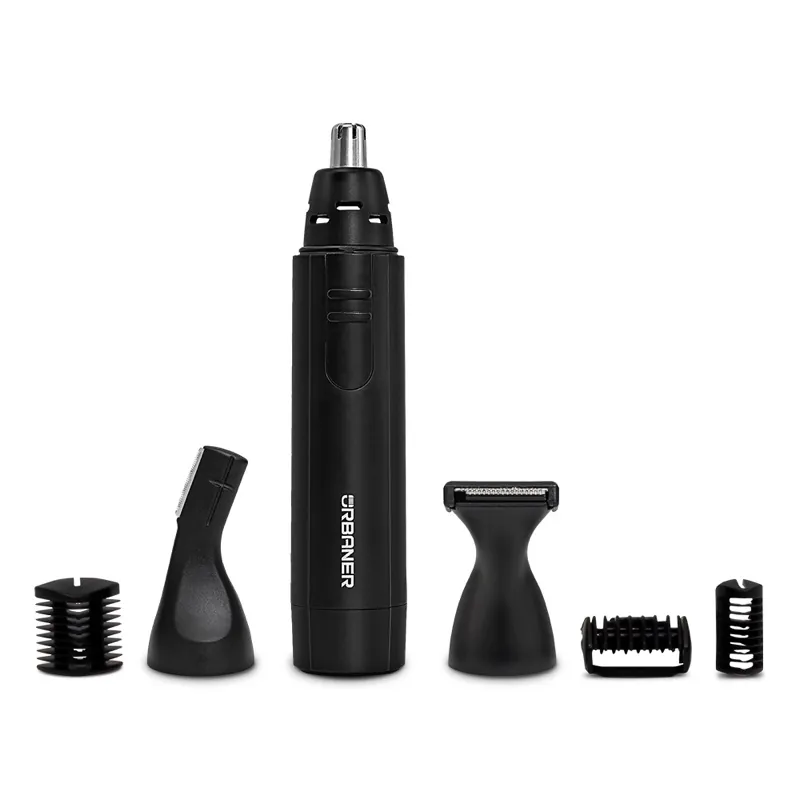
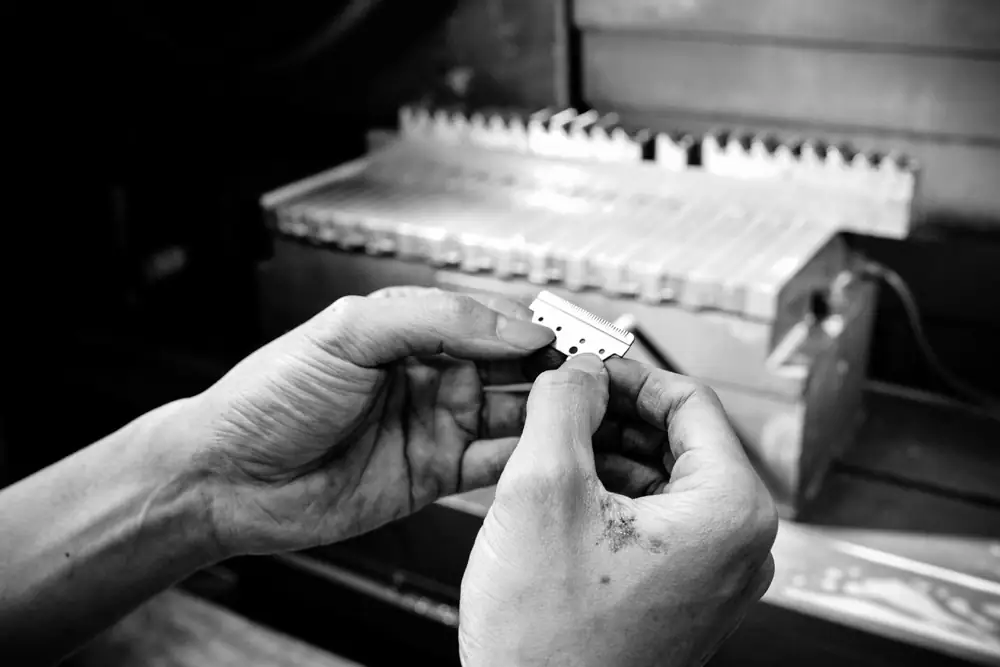
The temptation in multifunctional kits is to put the budget into the hero head and economize on the other two. That is a mistake, because the recipient decides what the product is worth based on whichever head they use first. At KUNNEX, the MB-980 Waterproof 3-in-1 Grooming Kit pairs nose, beard, and eyebrow heads that all use Japanese high-carbon steel blades, driven by a Japanese MABUCHI motor. Every blade is hand-checked after grinding, blade pairs are matched rather than randomly assembled, and cutting performance is verified batch by batch — the same process discipline applied to single-function devices.
Waterproofing that covers the whole device
Gift recipients do not read manuals. They rinse the device under the tap, whatever the packaging says. A kit rated IPX8 and fully washable — as the MB-980 is — survives real-world behavior; a splash-resistant kit produces warranty claims. Whole-device waterproofing also simplifies the marketing claim: “rinse it clean” is a benefit a gift buyer understands in two seconds on the shelf.
Sensible power architecture for the gift context
A single AA battery, with roughly 90 minutes of runtime, is a deliberate choice for a gift product. The device works the moment it is unwrapped, with no charger to lose and no cable standard to become obsolete. For brands whose positioning favors rechargeable, the same engineering questions apply to USB-C platforms — the point is that the power system should be chosen for the use case, not for the spec sheet.
How do you evaluate a 3 in 1 grooming kit supplier before a seasonal deadline?
Gift-season orders are unforgiving. Miss the shipping window and the inventory sits until next year. That makes supplier evaluation for a Q4 program stricter than for an evergreen SKU. The comparison below summarizes what to verify.
| Evaluation point | What a trading company typically offers | What an in-house manufacturer can show |
|---|---|---|
| Blade and motor sourcing | Assembled from third-party components; origin varies by batch | Blades, motors, and battery systems designed and built under one roof; named materials (Japanese steel, MABUCHI motors) |
| Quality control | End-of-line sampling, often outsourced | Hand-checked blades, matched pairs, batch cutting tests, optical inspection before packing |
| Factory access | Audit requests deflected or redirected | Factory audits and third-party inspections welcomed |
| Lead time accountability | Dependent on upstream suppliers | Typically 45–60 days mass production after order confirmation, controlled internally |
| Certifications | Certificates may cover a similar model, not yours | CE, RoHS, PSE, FCC applied per target market and confirmed per model |
The lead-time column deserves emphasis. For holiday retail, working backward from an early-November in-store date means order confirmation typically needs to happen by late summer: samples of existing platforms in 7–14 days, then 45–60 days of mass production, then transit. A supplier who controls its own tooling and production line can commit to that calendar; one who assembles bought-in components inherits every upstream delay. Most private label projects at KUNNEX move from first inquiry to sellable stock in about three months — a timeline worth confirming per project, but one that makes a same-year gift program realistic if conversations start before summer ends.
What customization options matter most for gift-season kits?
Private label customization is where a gift kit becomes your gift kit. The options that move the needle for seasonal retail, all available on established platforms like the MB-980, include:
- Retail gift-box packaging designed to be shelf-ready and giftable without repacking — the single most important customization for this format.
- Logo printing or engraving on the device body, so the brand is present after the box is discarded.
- Custom housing colors to match brand identity or create seasonal colorways.
- Custom blade-head combinations on multifunctional platforms — a brand focused on facial grooming might configure the kit differently from one targeting full-body trimming.
- Manuals in customer languages, which matters for kits sold across the EU or into Japan where a translated manual is an expectation, not a courtesy.
MOQ for customized programs is typically 1,000–3,000 units per model — a range that lets a mid-sized brand run a genuine seasonal test without warehouse-scale commitment.
How does the 3-in-1 kit fit into a broader grooming line?
The strongest argument for the multifunctional kit is not the kit itself — it is what the kit does for the rest of the catalog. A gift kit is many customers’ first contact with a grooming brand. If the beard head impresses, the natural next purchase is a dedicated beard trimmer with adjustable combs and a rechargeable platform. If the nose head becomes a daily habit, a premium standalone nose trimmer is the upgrade. Brands that plan this progression source the kit and the dedicated devices from the same manufacturer, so blade feel and build quality stay consistent as the customer moves up the line.
This is also why supplier choice compounds. A factory with 49 years of electric grooming device manufacturing behind it — and more than 30 years as an OEM partner to internationally recognized brands with effectively zero tolerance for customer complaints — can support the whole progression from one platform, one quality system, and one commercial relationship. KUNNEX products are sold in more than 20 countries across four continents, and the company’s own consumer brand URBANER has retailed the same engineering on Amazon US and Amazon Japan since 2014, so the market feedback loop feeds directly back into the factory.
What is the practical next step?
If a 3-in-1 kit is on your roadmap for the next gift season, the sequence is straightforward: request a sample of the existing MB-980 platform, evaluate it against your retail price target, and scope the customization — box, logo, colors, head combination — that turns it into your SKU. Samples of existing platforms typically ship in 7–14 days, which means you can hold the product before committing to anything. For a wider view of how a private label program runs from first inquiry to sellable stock, see the guide on how to start a private label grooming brand, or review the cost structure in the private label trimmer cost breakdown. The brands that win gift season are the ones whose supplier conversations started in spring.
Working on a grooming product? KUNNEX private-labels proven platforms and builds OEM programs from its ISO 9001 factory in Taiwan — samples in 7–14 days.
Talk to the factory