
Few numbers cause more friction between buyers and factories than the minimum order quantity. If you are comparing suppliers, the MOQ for private label electronics is usually the first hard figure you encounter, and it often arrives before you fully understand what sits behind it. Some buyers read a 1,000-unit minimum as a factory being inflexible; others read a 300-unit minimum as a bargain. Both readings can be wrong. This article explains why minimums exist in electronics manufacturing, what a realistic MOQ looks like for grooming devices specifically, and how to negotiate terms that work for a first order without compromising the product you put your brand name on.
What Does MOQ Mean in Private Label Electronics?
MOQ, or minimum order quantity, is the smallest number of units a factory will accept for a single production run of one model. In private label electronics, the number is usually quoted per model and per configuration, not per order. That distinction matters: 3,000 units spread across three housing colors may be treated as three separate 1,000-unit runs, because each color requires its own material batch and changeover on the line.
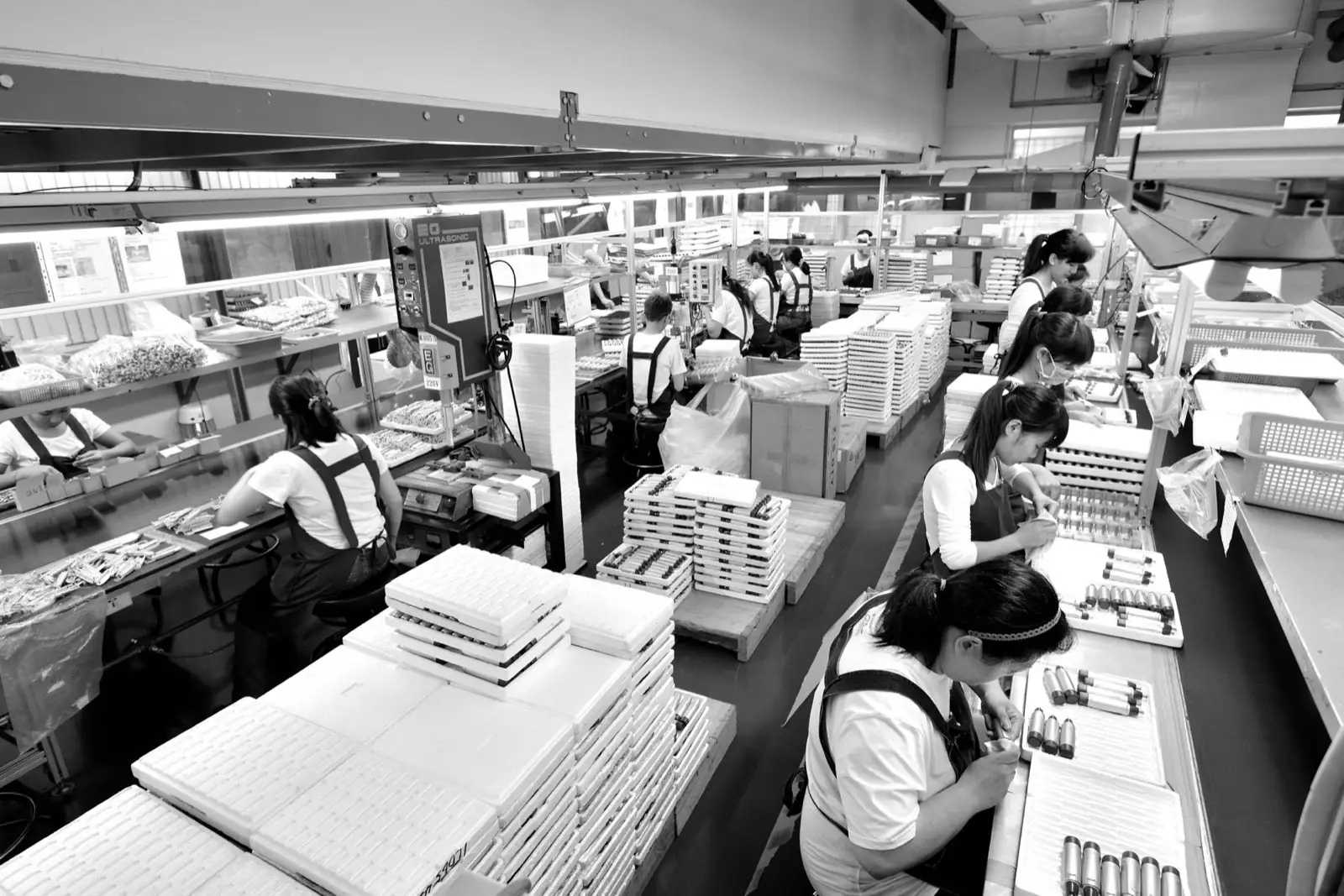
The MOQ is not a sales tactic. It is the point at which a production run stops losing money for the factory. Every run of an electric grooming device carries fixed costs that do not shrink with volume—line setup, component procurement at supplier minimums, blade grinding and matching, jig and fixture preparation, quality-control sampling plans, and packaging plate charges. Spread over 5,000 units those costs are trivial per piece. Spread over 200 units they can exceed the value of the goods.
Why Do Factories Set Minimum Order Quantities?
Understanding the factory’s cost structure is the foundation of any successful negotiation, so it is worth walking through the main drivers one by one.
Component supplier minimums
A trimmer is an assembly of parts that each carry their own minimums. Motors, battery cells, switches, PCBs, and steel for blades are purchased from upstream suppliers who quote their own MOQs. A factory that agrees to build 200 units may still have to buy 1,000 motors. Factories that keep core components in-house have more room here—KUNNEX designs and manufactures blade heads in its own Taiwan facility, which removes one external minimum from the equation—but purchased components such as Japanese MABUCHI motors still arrive in supplier-defined batch sizes.
Line changeover and setup
Switching an assembly line from one model to another consumes hours of skilled labor: fixtures are swapped, torque settings verified, test stations reprogrammed, and first-article inspections completed before the first sellable unit comes off the line. These hours cost the same whether the run is 300 units or 30,000.
Quality assurance overhead
Serious factories verify cutting performance batch by batch and inspect optically before packing. Sampling plans, test records, and inspection labor are largely fixed per run. Cutting the run size does not cut the QA workload proportionally—which is why factories that quote unusually low minimums often quietly cut the QA instead.
Packaging and printing plates
Private label work adds printed gift boxes, manuals in your market’s language, and logo application. Printers charge plate and setup fees, and box printing has its own minimums, typically in the low thousands.
What Is a Typical MOQ for Private Label Electronics?
For electric grooming devices—nose trimmers, beard trimmers, hair clippers, body shavers—a realistic MOQ from an established factory typically falls between 1,000 and 3,000 units per model, confirmed per project. Where a specific project lands inside that range depends mostly on how much customization it carries.
| Customization level | What it involves | Effect on MOQ |
|---|---|---|
| Logo only | Printing or engraving your logo on a stock housing and stock packaging | Lower end of the range |
| Custom colors and packaging | Custom housing colors, retail gift box, manuals in your language | Middle of the range; color batches may set per-color minimums |
| Custom configuration | Comb and accessory combinations, custom blade-head combos on multifunctional platforms | Middle to upper range |
| Custom tooling | New housing molds or structural changes | Upper range or above; tooling amortization dominates |
If a quoted minimum is far below this range for a fully customized electronic device, ask what is being skipped. Often the answer is batch testing, blade matching, or certified components. The unit price looks attractive until returns and reviews arrive. We cover the full cost picture, including what a low quote can conceal, in our private label trimmer cost breakdown.
How Can You Negotiate a Lower MOQ?
Negotiating MOQ is less about pressure and more about reducing the factory’s fixed-cost exposure. Buyers who understand the levers below consistently get better first-order terms than buyers who simply ask for a smaller number.
- Start from an existing platform. A proven model with existing tooling, existing certifications in progress, and stocked components carries far less setup risk. Samples of existing platforms typically ship in 7–14 days, and minimums are at the friendlier end of the range. Save fully custom tooling for your second or third order, once sales data justifies it.
- Limit color and configuration count on the first run. One color at 2,000 units is a very different proposition from four colors at 500 each. Launch with your strongest colorway; add variants after reorder.
- Accept stock packaging with your artwork. Using a factory’s standard box structure with your printed design avoids new die-cut tooling and lowers the packaging minimum.
- Offer a forecast, not just an order. A factory deciding whether to accept 1,000 units is really pricing the relationship. A credible 12-month forecast with planned reorders changes the calculation, even without a binding commitment.
- Be flexible on lead time. If the factory can slot your smaller run into a gap in its schedule rather than a dedicated changeover, the setup cost burden falls. Mass production typically runs 45–60 days after order confirmation; adding buffer gives the planner room to help you.
- Consolidate across models with shared parts. Multifunctional platforms that share motors, batteries, and handles across blade-head variants let a factory pool component purchasing across your SKUs.
When Is a Low MOQ a Warning Sign?
Low minimums are genuinely useful for market testing, but in electronics they carry risks that do not exist in, say, printed apparel. A trading company can offer 200 units because it is reselling from an existing generic production run—which means no control over blade quality, no batch records, and no recourse when specifications drift between orders. A factory offering the same number may be filling line gaps with reduced inspection.
The questions to ask are concrete. Will this run have its own inspection records. Are blades checked and matched for this batch, or drawn from a general bin. Which certifications—CE and RoHS for the EU, PSE for Japan, FCC for the US—apply to the exact model and configuration being shipped, confirmed per model. A supplier comfortable with these questions, and with factory audits or third-party inspections, is a supplier whose low first order is a strategy rather than a shortcut. For a broader framework on structuring a first sourcing project, see our guide on how to start a private label grooming brand.
How Does KUNNEX Structure MOQ for Private Label Partners?
KUNNEX has manufactured electric grooming devices in Taiwan since 1977 and has spent more than 30 years as an OEM partner to internationally recognized brands whose tolerance for customer complaints was effectively zero. That history shapes how we handle minimums: we would rather agree on a realistic first order built on an existing platform than accept a number that forces corners to be cut.
Typical terms: MOQ of 1,000–3,000 units per model, samples of existing platforms in 7–14 days, and mass production 45–60 days after order confirmation, all confirmed per project. Most private label projects move from first inquiry to sellable stock in about three months. Customization covers logo printing or engraving, custom housing colors, retail gift-box packaging, manuals in your customers’ languages, and comb or accessory combinations—the full scope is described on our Private Label Program page.
If you are weighing a first order and the minimum is the sticking point, the fastest path forward is a specific conversation: which platform, which market, which certifications, what forecast. Write to us through the contact page with those four data points and we will respond with concrete numbers rather than a generic quote sheet.
Working on a grooming product? KUNNEX private-labels proven platforms and builds OEM programs from its ISO 9001 factory in Taiwan — samples in 7–14 days.
Talk to the factory