
Ask three suppliers how long a private label project takes and you will get three confident answers, none of which mention the parts of the process that actually consume the calendar. A realistic private label production timeline for an electric grooming device runs about three months from first inquiry to sellable stock—when the project is built on an existing platform and managed without dead time between phases. This article breaks that figure into its component phases, shows where the days actually go, and identifies the decisions that quietly add weeks. It is written for buyers planning a launch date, because a timeline you can trust is the difference between hitting a retail window and paying for air freight to rescue one.
What Does a Realistic Private Label Production Timeline Look Like?
The table below reflects typical figures for a project based on an existing platform—a proven model customized with your logo, colors, and packaging rather than new tooling. All durations are typical and confirmed per project.
| Phase | Typical duration | What happens |
|---|---|---|
| Inquiry and specification | 1–2 weeks | Platform selection, target market, certification scope, quotation |
| Sampling | 7–14 days | Samples of existing platforms prepared and shipped for evaluation |
| Customization and artwork | 1–3 weeks, overlaps sampling | Logo application, housing colors, gift-box artwork, manual translation |
| Order confirmation | Buyer-dependent | Final specification freeze, deposit, production slot booked |
| Mass production | 45–60 days | Component procurement, assembly, batch quality verification, packing |
| Shipping | Route-dependent | Sea freight to US/EU typically adds several weeks; air freight days |
Add the phases and the arithmetic matches the headline: most projects reach sellable stock about three months after inquiry, before ocean transit. A project involving new molds, structural changes, or certifications applied from scratch sits on a longer clock, which is one reason first orders are usually best built on existing platforms—a point covered in depth in our guide on how to start a private label grooming brand.
How Long Does Sampling Actually Take?
For existing platforms, KUNNEX typically ships samples within 7–14 days. The number that matters more, however, is how long sampling takes in total, including your side of the loop: evaluation, feedback, and any second round. Buyers who evaluate systematically—cutting performance on real hair, waterproofing, battery runtime, noise, packaging fit—usually close sampling in one round plus confirmation. Buyers who circulate a sample around an office for a month lose that month from the launch date, not from the factory’s quote.
Three practices keep sampling tight. First, define acceptance criteria before the sample arrives, so evaluation is a checklist rather than a debate. Second, test the sample in the configuration you will actually sell—if you plan a champagne housing with a custom comb set, do not sign off on a black stock unit and assume equivalence. Third, send consolidated feedback in one document; serial one-line emails each restart the clock.
What Happens During Certification and Compliance?
Electric grooming devices ship into regulated markets, and paperwork can either run in parallel with production or block it entirely. The certifications involved are applied per target market and confirmed per model: CE and RoHS for the EU, PSE for Japan, and FCC for the US, with additional certifications arranged where a market or retailer requires them.
The timeline impact depends on your starting point. An existing platform that has already been through testing for your target market mainly needs document work under your brand—fast. A configuration or market the model has not been certified for needs laboratory time, which must be booked, and a failed test costs a full retest cycle. Ask your manufacturer, at the specification stage, exactly which certifications the chosen model and configuration hold for your market and which must be applied for. The answer belongs in the project plan, not in a surprise six weeks before shipment. Retailer-specific requirements—some chains ask for extra documentation or their own test reports—should surface at this stage too.
Why Does Mass Production Take 45–60 Days?
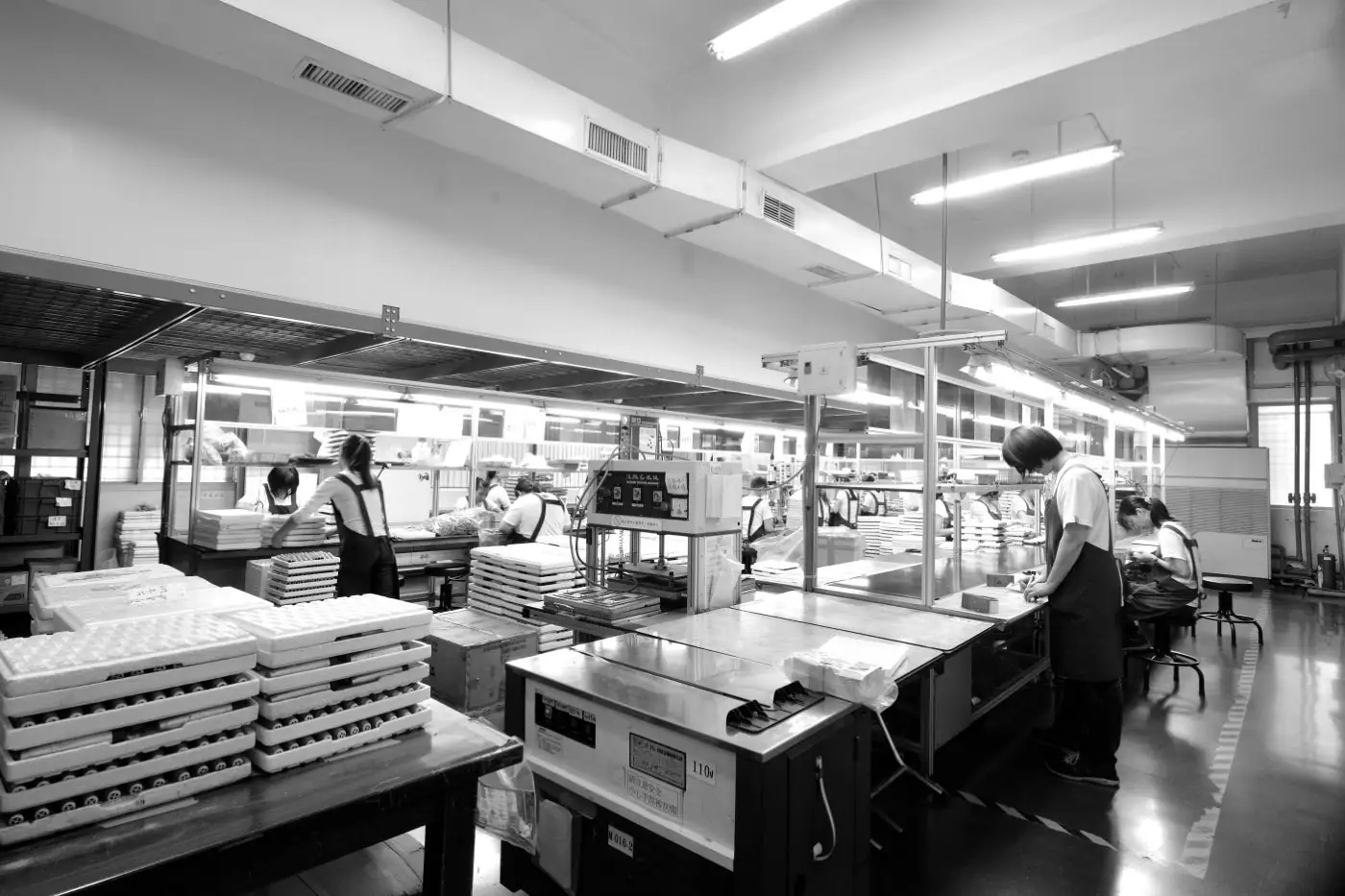
Buyers sometimes read a 45–60 day production window as slack. It is mostly physics and procurement. The clock starts with component purchasing: motors, battery cells, steel, and electronic components arrive on their own supplier lead times, and a factory that starts assembly before all certified components are in-house is improvising. In-house processes follow—at KUNNEX, blade heads are ground, hand-checked after grinding, and matched as pairs in our own Taiwan facility rather than bought as generic modules, and cutting performance is verified batch by batch during the run.
Assembly itself is the fast part. What surrounds it is what protects your review score: first-article inspection at line start, in-process checks, functional testing, and optical inspection before packing. Printed gift boxes and translated manuals also land inside this window, which is why artwork finalized late is one of the most common causes of slipped shipments—the goods are ready and the boxes are not.
What Makes a Private Label Production Timeline Slip?
Across real projects, delays cluster around a handful of causes, most of them controllable from the buyer’s side.
- Late specification changes. A color revision or comb-set change after order confirmation reopens procurement and can reset the production slot.
- Artwork bottlenecks. Box dielines, logo files, and manual translations delivered late push printing past the assembly finish date.
- Certification discovered late. Finding out in week eight that a retailer requires an additional test report adds laboratory lead time at the worst moment.
- Payment and paperwork gaps. Production slots are booked at order confirmation; a delayed deposit can mean waiting for the next available slot rather than sliding a few days.
- Peak-season logistics. Sea freight ahead of Q4 is congested; a production run finishing in September can still miss November shelves if bookings were not made early.
Note what is absent from this list: factories rarely lose weeks on assembly itself. The calendar is lost in the seams between phases, which is why a supplier who communicates quickly matters as much as one who manufactures well. KUNNEX answers inquiries in English, Japanese, or Mandarin within two business days, through the Taiwan factory or the Tokyo office established in 2026.
How Can Buyers Compress the Timeline?
Compression comes from overlap and preparation, not from pressuring the production window.
- Choose an existing platform. Proven tooling, stocked components, and prior test history remove the longest and least predictable phases.
- Run artwork parallel to sampling. Box design, logo placement, and manual translation can be finalized while you evaluate the sample, so order confirmation triggers printing immediately.
- Freeze the specification early and completely. A one-page spec—model, color, combs, packaging, certifications, labeling—signed before deposit prevents the mid-production changes that reset clocks.
- Book logistics when production starts. Reserve freight at order confirmation, not at completion.
- Plan the reorder before the first sale. Reorders skip specification and sampling entirely; a standing forecast lets the factory pre-position components so a repeat run needs only the production window.
Cost and timeline trade against each other at several points—air versus sea, one color versus three, stock box versus custom structure. The interaction between these choices and unit economics is mapped in our private label trimmer cost breakdown.
Where Does KUNNEX Fit in Your Launch Plan?
KUNNEX has built electric grooming devices in Taiwan since 1977, spent more than 30 years as an OEM partner to internationally recognized brands, and runs its own consumer brand, URBANER, through the same lines—so the three-month figure is not an estimate borrowed from a brochure but the cadence our own retail launches run on. Typical terms: samples of existing platforms in 7–14 days, MOQ of 1,000–3,000 units per model, mass production 45–60 days after order confirmation, all confirmed per project.
The scope of customization—logo printing or engraving, housing colors, retail gift-box packaging, manuals in your customers’ languages, and comb or accessory combinations—is detailed on our Private Label Program page. If you have a launch window in mind, share the target date and market with us through the contact page; we will map the phases backward from your shelf date and tell you honestly whether it holds.
Working on a grooming product? KUNNEX private-labels proven platforms and builds OEM programs from its ISO 9001 factory in Taiwan — samples in 7–14 days.
Talk to the factory