
A nose and ear trimmer is the smallest, cheapest device in most grooming catalogues, which is exactly why choosing a nose hair trimmer manufacturer is harder than it looks. The product has few parts, a low unit price, and a specification sheet that fits on half a page — so almost every supplier can appear qualified on paper. The differences only surface later, in return rates, in one-star reviews about pulling and rusting, and in the cost of replacing a container of stock that failed in the field. This guide sets out twelve questions that separate a factory that builds the blade from a factory that merely buys it, grouped into blades, build, and commercial terms.
The questions below assume you are sourcing for a brand you intend to keep selling for years — a private label range, a distributor portfolio, or an OEM programme — rather than a one-off container. They are written to be asked in an email and answered in writing, so that the answers become part of your supplier file.
Why is choosing a nose hair trimmer manufacturer different from sourcing other small appliances?
A nose trimmer has a duty cycle no other grooming device shares. It is used for twenty seconds at a time, close to sensitive skin, and then rinsed and left in a humid bathroom. Its rotary blade assembly must shear fine hair without catching skin, stay corrosion-free through hundreds of rinses, and run quietly enough that a user holds it against their nostril without flinching.
That combination punishes shortcuts. A blade pair with a slightly open gap will pull instead of cut — the single most common complaint in the category. A housing that is splash-resistant rather than genuinely sealed will admit water at the switch and fail within months. Neither defect appears in a first-article sample. Both appear in month four, after the reviews are already public. The questions that follow are designed to surface those risks before you commit.
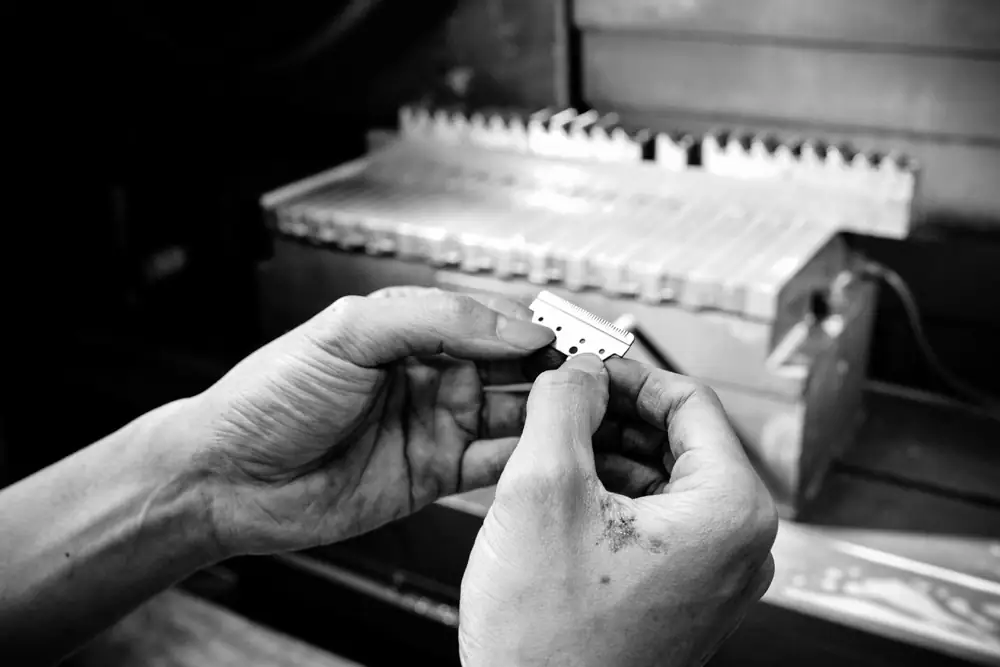
Questions 1–4: what should you ask a nose hair trimmer manufacturer about blades?
1. Do you grind your own blades, or buy finished blade heads?
This is the single most revealing question. A factory that grinds in-house controls edge geometry, flatness, and surface finish, and can correct a problem at source. A factory that buys finished blade modules controls only incoming inspection and can do little except change vendors. Ask to see the grinding equipment, either on video or in person.
2. How are moving and stationary blades paired?
The cutting action depends on two blades in tight, even contact. Two individually in-spec blades assembled from random bins can still pull hair. Matched pairing is a deliberate process step with a labour cost attached, and suppliers who do it will describe it readily. Suppliers who do not will change the subject to material grade.
3. What blade material do you use, and why that one for this category?
For nose and ear trimmers, Japanese stainless steel is usually the right answer: strong corrosion resistance, good hardness, and sensible cost for a device that is rinsed constantly and cuts fine hair. A supplier who names a harder, sharper steel without explaining the corrosion trade-off is reciting a spec sheet rather than engineering a product.
4. How is cutting performance verified, and how often?
Dimensional checks confirm that parts are within tolerance. They do not confirm that a device cuts. Ask whether cutting performance is tested batch by batch, whether optical inspection runs before packing, and what the reject criteria are. Ask for the actual records from a recent batch, not a sample certificate.
Questions 5–8: what should you ask about build, sealing, and power?
5. Is the device whole-piece waterproof, or only washable at the head?
These are different products. A whole-piece waterproof body can be rinsed under a tap without care; a head-washable device cannot. Both are legitimate designs at different price points, but the marketing claim on your packaging must match the engineering, or the returns will correct it for you.
6. How does a user clean the device, and how easily does the head come apart?
Cleaning friction drives abandonment, and abandonment drives poor reviews. Some designs unscrew for rinsing; the MB-041, for example, uses a water-suction cleaning function that draws water through the cutting head. Ask the supplier to demonstrate the cleaning sequence on a sample and time it yourself.
7. What is the power system, and does it fit the market?
A single AA cell suits a device sold as a reliable, low-maintenance staple; AAA suits a slim pen-type body; USB rechargeable suits premium positioning. Each has consequences for weight, cost, certification, and shipping. Decide the positioning first, then let the power system follow, not the reverse.
8. What runtime do you quote, and how was it measured?
Runtime figures are meaningless without a test condition. Ask what battery chemistry, load, and duty cycle produced the number. A quoted 90 minutes on a fresh alkaline AA under no-load conditions is a different claim from 90 minutes of real trimming, and only one of them will match your customer’s experience.
Questions 9–12: what should you ask about compliance and commercial terms?
9. Which certifications apply to my market, and who holds them?
CE and RoHS cover the EU, PSE covers Japan, FCC covers the United States. Certifications are applied per target market and confirmed per model — a certificate for a different model in the same family is not coverage. Establish in writing which party holds the certificate and who pays if a retest is required.
10. What is the MOQ, and what changes at higher volumes?
A typical MOQ for this category is 1,000–3,000 units per model. More useful than the number itself is what it unlocks: custom tooling, housing colours, and packaging generally have their own thresholds. Ask for the tiers rather than a single figure so you can plan a growth path.
11. What can genuinely be customised at my volume?
Logo printing or engraving, stock housing colours, retail gift-box packaging, and manuals in your language are usually available at modest volumes. New tooling for a bespoke housing is a different order of commitment. The distinction between badging an existing platform and commissioning a new one is covered in detail in the comparison of private label, OEM, and ODM models.
12. Can I audit the factory, and can I send a third-party inspector?
The answer matters more than the audit. A supplier who welcomes factory audits and third-party inspections is describing a floor they are comfortable showing. Hesitation, or a preference for meeting at a trade show or an office address that is not the production site, is information in itself.
How should you weigh a nose hair trimmer manufacturer’s answers?
| Signal | Strong supplier | Weak supplier |
|---|---|---|
| Blade origin | Ground, matched, and inspected in-house | Blade heads bought as finished modules |
| Quality evidence | Per-batch cutting records, optical inspection before packing | A single certificate for a first-article sample |
| Waterproofing | States whole-piece or head-washable precisely | Uses “waterproof” without qualification |
| Certification | Per-model, per-market, named holder | A family certificate offered as coverage |
| Transparency | Audits and third-party inspection welcomed | Site visits deferred or redirected |
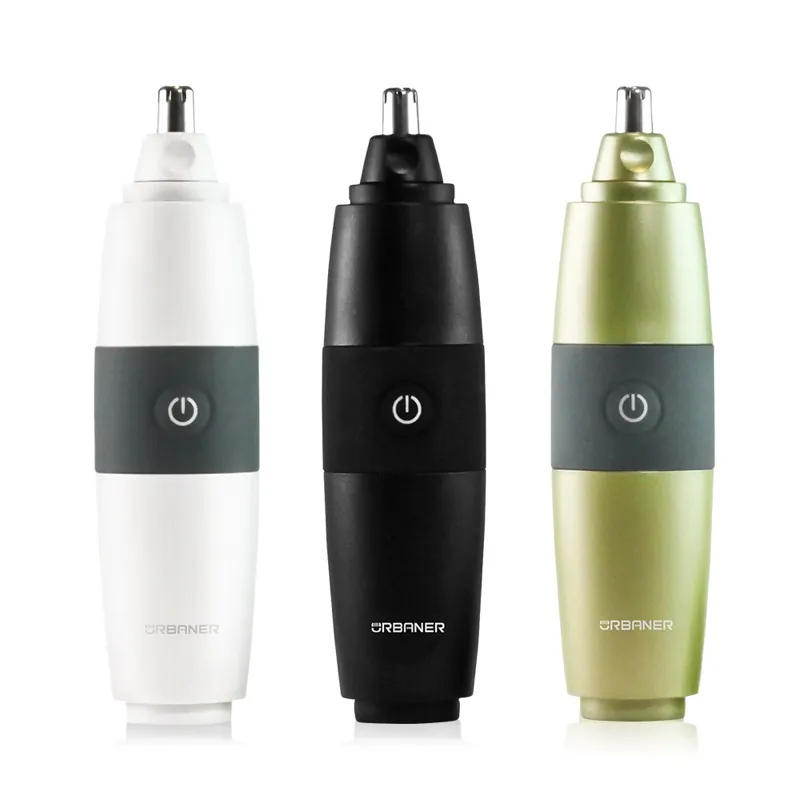
No supplier will score perfectly on every line, and the lowest quote will rarely be the one that does best here. KUNNEX is candid about that: low-cost supply chains can often quote roughly half the unit price, and the argument for paying more rests entirely on total cost of quality — returns, review damage, marketplace delisting, and chargebacks that land months after the invoice is settled.
KUNNEX has manufactured electric grooming devices in Taiwan since 1977, including more than thirty years as an OEM partner to international brands whose tolerance for customer complaints was effectively zero. Blade heads, motors, and battery systems are designed and built in-house in an ISO 9001 certified factory. You can review the current rotary platforms on the nose and ear trimmer product line, or ask these twelve questions directly at sales@kunnex.com. Samples of existing platforms typically ship in 7–14 days, and enquiries are answered in English, Japanese, or Mandarin within two business days — details are on the contact page.
Have a drawing or a target specification? Send it for a feasibility check — tooling, blade heads, motors, and battery systems are engineered in-house, so the answer comes from the people who will build it.
Send a specification