
Buyers are right to pause when they discover that a factory with own brand ambitions wants to manufacture their private label product. The concern is obvious: is this supplier a partner or a future competitor, and will the best components quietly go to its own line? It is a fair question, and it deserves a direct answer rather than reassurance. KUNNEX has manufactured electric grooming devices in Taiwan since 1977 and launched URBANER, our own consumer brand, in 2014. Running that brand has changed how we build products for everyone else—mostly in ways that benefit the private label clients who were here long before URBANER existed. This article explains what we learned by selling directly, and how we handle the conflict question.
Why Would a Contract Manufacturer Start Its Own Brand?
For three decades we were an OEM partner to internationally recognized brands whose tolerance for customer complaints was effectively zero. That work taught us a great deal about tolerances and inspection, and almost nothing about what happens after a product reaches a consumer. We saw purchase orders and occasional quality complaints. We never saw a review, a return reason, or a support ticket.
That gap matters more than it sounds. A factory that only sees purchase orders optimizes for what the buyer inspects at the gate. A factory that also sells to end users optimizes for what the customer experiences in month six. Those two targets overlap, but they are not the same, and the difference between them is exactly where most grooming-device failures live.
URBANER was launched to close that loop. It now sells on Amazon US, Amazon Japan, and through retail across four continents. Every return reason, every one-star review, and every support question comes back to the same building where the product was designed and ground.
What Does a Factory With Own Brand Experience Learn?
The lessons have been specific rather than philosophical, and each one has changed a process or a specification.
Which defects customers actually punish
Engineering intuition ranks defects by severity. Customers rank them by how the product feels in the first thirty seconds. A trimmer that pulls hair generates immediate, vividly worded returns; a slightly heavier housing generates none. Seeing that distribution taught us where to put inspection effort—on cutting performance verified batch by batch, on hand-checking every blade after grinding, and on matched blade pairs rather than random assembly.
How cleaning behavior differs from design assumptions
Consumers do not clean devices the way manuals describe. They rinse them, or they do not clean them at all. That reality is why washability became a cutting-performance requirement in our lines rather than a marketing bullet: the MB-041 Waterproof Nose Trimmer uses a water-suction cleaning function, and the MB-980 Waterproof 3-in-1 Grooming Kit is IPX8 fully washable.
What packaging has to survive
Marketplace logistics punish packaging in ways that retail distribution does not. Gift-box formats that survive a pallet do not always survive a parcel network, and we learned that on our own inventory before applying it to client programs.
How listings fail
Running a brand on marketplaces means watching how a defect rate converts into a ranking problem, then into an advertising cost, then into a margin problem. That sequence is invisible from inside a factory that only ships to purchase orders, and it is the strongest argument we know for paying more per unit than the lowest quote requires.
What a warranty claim reveals that an inspection cannot
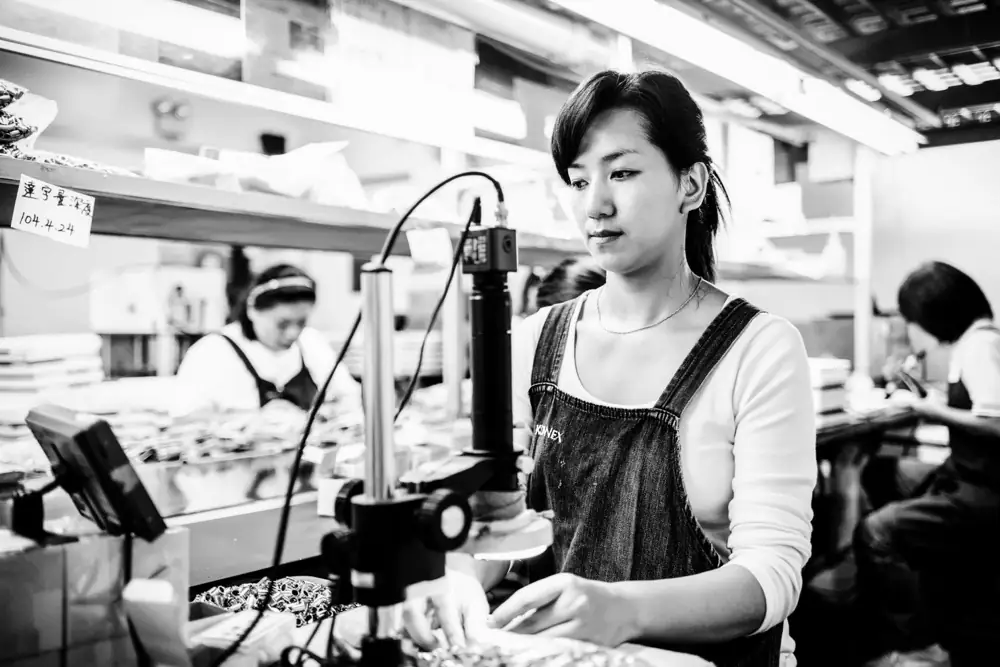
Gate inspection answers one question: does this unit meet specification today. A warranty claim answers a different one: does the specification survive contact with a real user for a year. Running URBANER means we receive units back, open them, and examine why they failed—edge wear, debris packing, seal degradation, cell decline. That teardown habit has fed directly into platform decisions such as whole-piece waterproof construction on the MB-061 Premium Ear & Nose Trimmer and IPX8 sealing on the MB-342B Waterproof Rechargeable Beard Trimmer. A private label client inherits those decisions without having to fund the learning.
Why we are candid about price
Selling directly also taught us the limits of our own argument. There are price points at which a quality-first build simply cannot compete, and pretending otherwise wastes a buyer’s time. We are rarely the lowest quote, and low-cost supply chains can quote roughly half our unit price. Knowing where that line sits—because we have met it in our own channels—means we can tell a buyer early when a project is a poor fit, rather than after a sample round.
Does the Factory Compete With Its Private Label Clients?
Here is the honest answer. URBANER occupies a defined position: our own brand, in our own channels, with its own positioning. Private label clients build products under their names, with their housing colors, packaging, comb configurations, and blade-head combinations. In most cases the platforms differ, and where they share a platform, the visible product—branding, color, accessories, box—is the client’s.
Practically, three commitments govern how we handle it:
- Client specifications are the client’s. Custom tooling, colors, and configurations developed for a private label program belong to that program.
- Component quality is not segmented. There is no better grade of blade steel reserved for URBANER. The same in-house blade heads, Japanese MABUCHI motors, and named blade materials—Sandvik Sweden stainless steel, Japanese high-carbon and stainless steel, ceramic working blades—go into every line, because segmenting components would require running two quality systems in one ISO 9001 factory.
- Territory and channel are discussable. Where a client’s market overlaps with ours, we would rather discuss it explicitly at the quotation stage than discover it later.
Buyers who want to verify any of this are welcome to. Factory audits and third-party inspections are welcome, and the ISO 9001 system and MIT Smile Mark verified by Taiwan’s Ministry of Economic Affairs exist so that these statements can be checked rather than trusted.
How Does a Factory With Own Brand Compare to Alternatives?
| Supplier type | Sees end-customer data | Owns core components | Main risk to the buyer |
|---|---|---|---|
| Trading company | No | No | No control over the factory that actually builds the product |
| Pure OEM assembler | No | Rarely | Optimizes for gate inspection, not field performance |
| Brand-owning factory | Yes | Varies | Channel overlap, which should be discussed openly |
No structure is risk-free. The relevant question is which risk you can inspect and negotiate, and channel overlap is far easier to manage in a contract than a supplier’s blindness to why its products come back.
What This Means for Your Program
If you are evaluating suppliers, ask any factory with a consumer brand what it learned from selling directly. A vague answer suggests the brand is a badge rather than a feedback loop. A specific answer—naming a design change, an inspection step, or a packaging revision that came from customer data—tells you the loop is real and that your product benefits from it.
Our private label program sets out customization options, typical MOQs of 1,000–3,000 units per model, and timelines; most projects run from inquiry to sellable stock in about three months. For the structural differences between arrangements, see private label vs OEM vs ODM, and for the full sequence of launching a brand, how to start a private label grooming brand. Questions about overlap, territory, or specification ownership are best raised early—write to sales@kunnex.com and we will answer within two business days in English, Japanese, or Mandarin.
Working on a grooming product? KUNNEX private-labels proven platforms and builds OEM programs from its ISO 9001 factory in Taiwan — samples in 7–14 days.
Talk to the factory