The hidden cost of a cheap supplier is the most expensive line item that never appears on a quotation. When a grooming brand compares factory quotes, the spreadsheet shows unit price, tooling, and freight—and on that spreadsheet, the lowest number always wins. What the spreadsheet does not show is what happens twelve months later: the return rate that eats the margin, the review score that suppresses the listing, the chargeback that arrives after the season is over. After nearly five decades of manufacturing electric grooming devices in Taiwan, and more than 30 years supplying OEM programs for internationally recognized brands whose tolerance for customer complaints was effectively zero, we have watched this math play out many times. This article walks through it step by step.
What Is the Hidden Cost of a Cheap Supplier?
The hidden cost of a cheap supplier is every expense created by the product after it leaves the factory, minus every expense you were quoted before it did. It is a real number, but it is distributed across so many budget lines—refunds, replacement shipments, customer service hours, advertising spent propping up a falling listing—that most brands never total it up. The unit price, by contrast, sits in one cell of one spreadsheet, which is why it dominates sourcing decisions far beyond its actual weight in profitability.
We should be honest about the starting point: KUNNEX is rarely the lowest quote. Low-cost supply chains can quote roughly half our unit price for a product that photographs identically. If unit price were the whole story, there would be no reason to read further. The rest of this article is about why it is not the whole story, and how to calculate the difference before you sign a purchase order rather than after.
Where Do the Hidden Costs Actually Appear?
The costs surface in four places, in a fairly predictable order.
1. Returns and refunds
A grooming device that pulls hair instead of cutting it, loses battery capacity after a month, or fails when rinsed under a tap comes back. On marketplaces, the brand refunds the full retail price, often pays return shipping, and usually cannot resell the unit. A single returned trimmer can wipe out the margin on several sold ones. Return rates are driven almost entirely by decisions made at the factory: blade grinding tolerance, blade-pair matching, motor quality, and whether waterproofing was tested or merely claimed.
2. Reviews and ranking
Marketplace algorithms convert product quality into visibility. A listing that slips from a strong rating to a mediocre one does not just look worse—it converts worse, ranks lower, and needs more advertising spend to hold the same sales volume. This is the quietest hidden cost and often the largest, because it compounds: every month of degraded ranking is revenue that never appears, so it is never attributed to the supplier decision that caused it.
3. Chargebacks, penalties, and delisting
Retail buyers charge back for late deliveries and failed inspections. Marketplaces suspend listings when defect complaints cross a threshold. In the worst case, a safety or compliance failure—a battery issue, a missing or invalid certificate—removes the product from sale entirely. At that point the brand is not losing margin; it is losing the listing history and review equity it spent years building.
4. Management time
Every quality escape consumes founder and team hours: arguing with the factory, arranging third-party inspections after the fact, rewriting listings, answering angry customers. This time has a real payroll cost and a larger opportunity cost, because it is time not spent on marketing or new products.
How Do You Calculate the Hidden Cost of a Cheap Supplier?
Here is the supply chain math lesson promised in the title. The numbers below are illustrative—plug in your own—but the structure is what matters.
Imagine a beard trimmer retailing at $29.99. Supplier A quotes $4.50 per unit; Supplier B, a quality-first factory, quotes $8.00. On 5,000 units, Supplier A appears to save you $17,500. Now model the downstream behavior:
- Return rate. Suppose the cheaper product returns at 8% and the better one at 2%. On 5,000 units, that is 400 returns versus 100. If each return costs you the full $29.99 refund plus roughly $5 in shipping and handling, the difference is 300 × $35 = $10,500.
- Lost conversion. Suppose degraded reviews cost you one sale in ten over the product’s first year. On 5,000 planned units at, say, $12 contribution margin per unit, 500 lost sales cost another $6,000—before counting the extra advertising spent trying to compensate.
- One incident. A single failed retail inspection, chargeback event, or temporary suspension can cost more than both figures above combined, and its probability is not zero with an unaudited supplier.
In this illustration, the $17,500 saving has already shrunk to about $1,000 of expected value before any serious incident—and the downside is not symmetrical. The cheap quote caps your upside at a few thousand dollars of savings while exposing you to open-ended listing and brand damage. That asymmetry, not the unit price, is the real decision.
| Cost category | Visible on the quote? | Who controls it | When it hits |
|---|---|---|---|
| Unit price | Yes | Negotiation | At order |
| Tooling and samples | Yes | Negotiation | Before production |
| Returns and refunds | No | Factory process quality | Months 1–12 |
| Review and ranking decay | No | Factory process quality | Months 2–24 |
| Chargebacks and delisting | No | Compliance and consistency | Unpredictable |
| Management time | No | Supplier reliability | Continuous |
What Does a Quality-First Quote Actually Pay For?
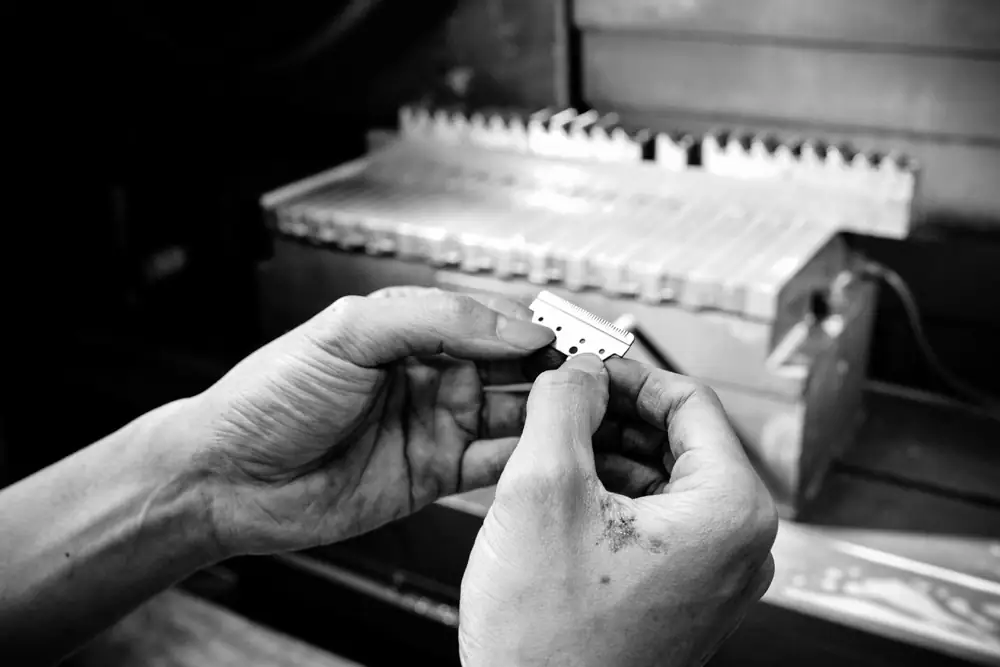
A higher unit price is only worth paying if it buys specific, verifiable process differences—not adjectives. At our factory in New Taipei City, the difference is concrete. Blade heads, motors, and battery systems are designed and manufactured in-house, so tolerances are engineered rather than assembled from the cheapest available parts. Every blade is hand-checked after grinding, and blade pairs are matched rather than randomly assembled. Cutting performance is verified batch by batch, and finished units pass optical inspection before packing. Blade materials are specified by name—Sandvik Sweden stainless steel, Japanese high-carbon and stainless steel, and ceramic working blades—and motors come from Japanese MABUCHI. None of this is visible in a product photo, and all of it is visible in a return-rate report.
Just as important, these claims are checkable. Factory audits and third-party inspections are welcome; a supplier whose quality is real has nothing to protect from an auditor. Our ISO 9001 certification and MIT Smile Mark (verified by Taiwan’s Ministry of Economic Affairs) exist precisely so that buyers do not have to take our word for any of this.
Which Questions Expose Hidden Costs Before You Sign?
You cannot see a future return rate, but you can see the processes that produce it. In supplier conversations, ask:
- Are blades, motors, and batteries made in-house or bought from the lowest bidder each quarter? Component switching is a leading cause of quality drift between your golden sample and mass production.
- What inspection happens on every unit, not just on a sampled few? Ask specifically how blades are checked and how waterproof claims are tested.
- Can we audit the factory, or send a third-party inspector, before and during production?
- Which certifications—CE, RoHS, PSE, FCC as relevant to your market—are already in place for the platform you are buying, and can documentation be provided per model?
- What happens when a defect is found? A factory’s answer about corrective action tells you more than its price list does.
For a fuller framework on evaluating suppliers, see our guide on how to choose a nose hair trimmer manufacturer, and for line-by-line quotation analysis, the private label trimmer cost breakdown shows where each dollar of a quote actually goes.
The Bottom Line for Brand Buyers
The lowest quote is not a saving; it is a loan, repaid later with interest in refunds, rankings, and management time. The right comparison is never unit price against unit price—it is total cost of quality over the life of the listing. Run the math above with your own retail price, your own margin, and honest return-rate assumptions, and the decision usually makes itself.
If you are weighing quotes for a grooming device program now, our private label program covers customization, typical MOQs of 1,000–3,000 units per model, and timelines—most projects go from inquiry to sellable stock in about three months. Send your target spec to sales@kunnex.com and we will respond within two business days in English, Japanese, or Mandarin.
Working on a grooming product? KUNNEX private-labels proven platforms and builds OEM programs from its ISO 9001 factory in Taiwan — samples in 7–14 days.
Switching suppliers? Request our supplier-transition due-diligence package — certifications, audit summary, and quality agreement template.
Talk to the factory