
A Taiwan trimmer factory history that stretches back to 1977 is more than a piece of company trivia—it is a data set. Manufacturing is an unforgiving business: currency swings, component shortages, retail consolidation, the rise of e-commerce, and wave after wave of lower-priced competition have closed factories on every continent. KUNNEX INCORPORATED was founded in Taiwan in 1977 and is still manufacturing electric grooming devices today, in its factory in the Wu Ku Industrial Zone of New Taipei City, shipping to more than 20 countries across four continents. This article is not a nostalgia piece. It is an attempt to answer a practical buyer’s question: what does surviving five decades in one product category actually require, and why should that matter when you choose a manufacturing partner?
What Does a Taiwan Trimmer Factory History Since 1977 Actually Prove?
Longevity in manufacturing is not sentimental; it is evidential. A factory cannot survive nearly fifty years in a competitive export category on luck. Survival requires repeat customers, and repeat customers in B2B manufacturing come from exactly one place: orders that shipped on spec, on time, at consistent quality, year after year. Marketing claims can be written in an afternoon; a five-decade operating record cannot.
For a buyer, this matters in three specific ways:
- Process maturity. Every failure mode a grooming device can produce—blades that pull, motors that stall, seals that leak, batteries that fade—has been encountered, diagnosed, and engineered out somewhere in those decades. New factories rediscover these failures on your inventory.
- Financial durability. A supplier that has weathered multiple recessions and industry shifts is less likely to disappear mid-project, taking your tooling and your lead times with it.
- Accountable reputation. A company that has traded under one name since 1977 has a reputation it cannot walk away from. That asymmetry—we have more to lose from a bad batch than any single order is worth—is the quiet foundation of trust in contract manufacturing.
How Did the OEM Decades Shape the Factory?
For more than 30 years, KUNNEX has manufactured as an OEM partner for internationally recognized brands—companies whose tolerance for customer complaints was effectively zero. That sentence is easy to read and hard to live. When your customer is a global brand, a defect rate that looks small on a spreadsheet becomes a meeting, an audit, and a corrective action report. Decade after decade of that discipline changes how a factory thinks.
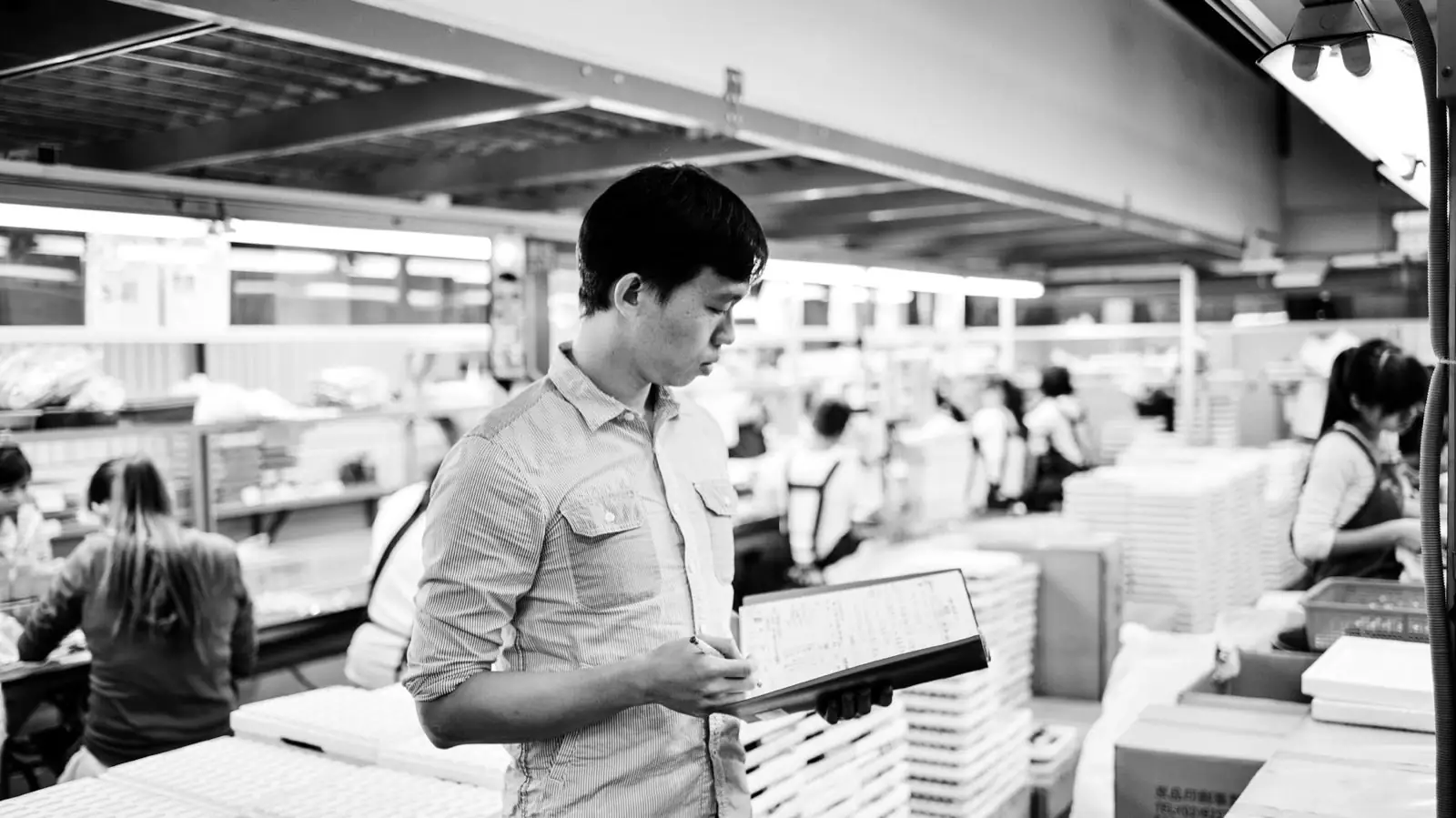
The visible legacy of those years is a set of habits that remain standard practice on our line today. Every blade is hand-checked after grinding. Blade pairs are matched, not randomly assembled. Cutting performance is verified batch by batch, and finished goods pass optical inspection before packing. None of these steps is the cheapest way to build a trimmer—they are the residue of decades spent answering to clients who counted complaints in single digits.
The less visible legacy is vertical integration. Relying on outside vendors for critical components means inheriting their quality drift, so blade heads, motors, and battery systems came in-house—designed, tooled, and mass-produced under one roof, with materials chosen by name: Sandvik Sweden stainless steel, Japanese high-carbon and stainless steel, ceramic working blades, and Japanese MABUCHI motors.
Taiwan Trimmer Factory History in Milestones: What Changed and What Did Not?
A few dated markers show how the company evolved while the core discipline stayed constant.
| Year | Milestone | What it signified |
|---|---|---|
| 1977 | KUNNEX founded in Taiwan | Start of a single-category focus on electric grooming devices |
| Following decades | 30+ years of OEM partnership with internationally recognized brands | Quality systems built to a zero-complaint standard |
| 2014 | Launch of URBANER, the company’s own consumer brand | Direct exposure to Amazon US, Amazon Japan, and retail customers |
| 2017 | Alibaba Taiwan Top 10 Netrepreneur | Early recognition of the shift into cross-border e-commerce |
| 2022–2023 | Taipei Neo Trade Award Gold; Golden Bull Award, Outstanding SME | External validation of trade and business performance |
| 2026 | D&B Taiwan Top 1000 Elite SME; Japan subsidiary opened in Tokyo (Minato-ku) | Financial standing and a permanent base closer to Japanese partners |
Two shifts in that table deserve comment. The 2014 launch of URBANER meant the factory began living with the consequences of its own quality decisions in the harshest environment available—public marketplace reviews—rather than only through OEM clients’ feedback. And the 2026 Tokyo office turned decades of exporting to Japan into a local presence, with inquiries answered in English, Japanese, or Mandarin within two business days.
What did not change is equally telling: the factory is still in Taiwan, still focused on grooming devices, and still doing blade grinding, motor assembly, and battery integration itself rather than outsourcing them to the cheapest bidder of the quarter.
What Were the Survival Lessons of Five Decades?
Specialize, then go deep
Factories that chase whichever product is fashionable accumulate breadth and lose depth. Staying inside one category for decades built something harder to copy than any machine: accumulated knowledge of how blades, motors, batteries, and waterproofing behave together over years of real-world use.
Own the critical components
Every crisis in the supply chain punished factories that depended on outside vendors for their core parts. In-house blades, motors, and battery systems meant quality and continuity stayed under our own roof when markets turned chaotic.
Let quality be audited, not asserted
ISO 9001 certification, the MIT Smile Mark verified by Taiwan’s Ministry of Economic Affairs, and an open door for factory audits and third-party inspections all follow one principle: claims a buyer can verify are worth more than claims a buyer must trust.
Never compete on price alone
KUNNEX has rarely been the lowest quote in any decade; low-cost supply chains can offer roughly half the unit price. The factories that tried to win that race are, for the most part, no longer here. The sustainable position was always total cost of quality—fewer returns, better reviews, uninterrupted listings—a comparison we lay out honestly in our analysis of Taiwan versus low-cost manufacturing.
Why Does This History Matter for Your Next Project?
When you brief a factory on a private label trimmer, you are not really buying a device; you are buying a probability distribution of outcomes—on-time delivery, return rates, review scores, reorder smoothness. A factory’s history is the best available evidence about that distribution. Five decades in one category, 100+ international B2B clients, and products sold in more than 20 countries from Japan and the US to the UK, Europe, and as far as Brazil: that record was expensive to build, which is precisely why it is meaningful.
The practical parameters are current, not historical: typical MOQs of 1,000–3,000 units per model, samples of existing platforms in 7–14 days, mass production in 45–60 days after order confirmation, and CE, RoHS, PSE, or FCC certification applied per target market and confirmed per model. Most private label projects go from inquiry to sellable stock in about three months—the process is described step by step in our guide on how to start a private label grooming brand.
You can read the fuller company story on our about page, or simply test the record directly: send your requirements to sales@kunnex.com, visit the factory in New Taipei City, or send a third-party inspector. A history like this one holds up to inspection—that has always been the point of it.
What that history produces today is visible in the manufacturing capabilities and across the current product range.
Working on a grooming product? KUNNEX private-labels proven platforms and builds OEM programs from its ISO 9001 factory in Taiwan — samples in 7–14 days.
Talk to the factory