
2026 tariff note: Under the U.S. Section 301 measures in effect as of July 2026, Taiwan-origin grooming devices (HS Chapter 8510) enter the United States at a net 10% tariff, while comparable China-origin products carry a significantly higher burden. The landed-cost math discussed below has shifted accordingly — for many brands, the real gap between a Taiwan quote and a China quote is now smaller than the FOB prices suggest.
Every grooming brand that sources overseas eventually runs the same made-in-Taiwan vs. made-in-China comparison, and the question is almost always framed the wrong way. It is presented as a choice between two countries, when in practice it is a choice between two industrial models: one built around the lowest achievable unit cost, and one built around repeatable tolerances. Both models are legitimate, and both produce products that photograph identically on a marketplace listing. The difference appears months later, in return rates, review scores, and whether unit number 9,000 behaves like the golden sample you approved. KUNNEX has manufactured electric grooming devices in Taiwan since 1977, and we are rarely the lowest quote. This article explains, without disparaging anyone, exactly what the price difference buys.
Why Is the Taiwan vs China Manufacturing Quality Debate So Confusing?
The confusion comes from comparing the wrong things. A country is not a factory. There are excellent factories in China and mediocre ones in Taiwan, and any buyer who has sourced for a decade knows both. What is genuinely different is the industrial structure each supply chain has optimized for over the past thirty years.
Low-cost supply chains have optimized for scale and price. Enormous component ecosystems mean almost any part can be sourced quickly and cheaply, and assembly houses can quote aggressively because they buy components on the open market and re-source them whenever a cheaper equivalent appears. That flexibility is a genuine strength for products where cost dominates and tolerances are loose.
Taiwan’s grooming-device sector went a different direction, largely because it spent decades as the OEM base for internationally recognized brands whose tolerance for customer complaints was effectively zero. When your customer will delist a product over a defect rate that most buyers would consider acceptable, you stop buying blades on the open market and start grinding them yourself. That is the actual fork in the road, and it is what a price comparison hides.
What Does the Price Gap Actually Represent?
Let us be direct about the number. For a comparable trimmer platform, low-cost supply chains can quote roughly half our unit price. That gap is real, and it is not explained by labor rates alone. It is explained by four structural decisions.
1. Who makes the blade
A trimmer is a blade with a motor attached. In an assembly model, the blade head is a purchased component, and the buyer of the finished product has no visibility into which grinding shop supplied it this quarter. At KUNNEX, blade heads, motors, and battery systems are designed and manufactured in-house, from R&D and tooling through mass production, under one roof. That vertical integration is expensive to own and is the single largest line in the price difference.
2. Whether blades are matched or assembled
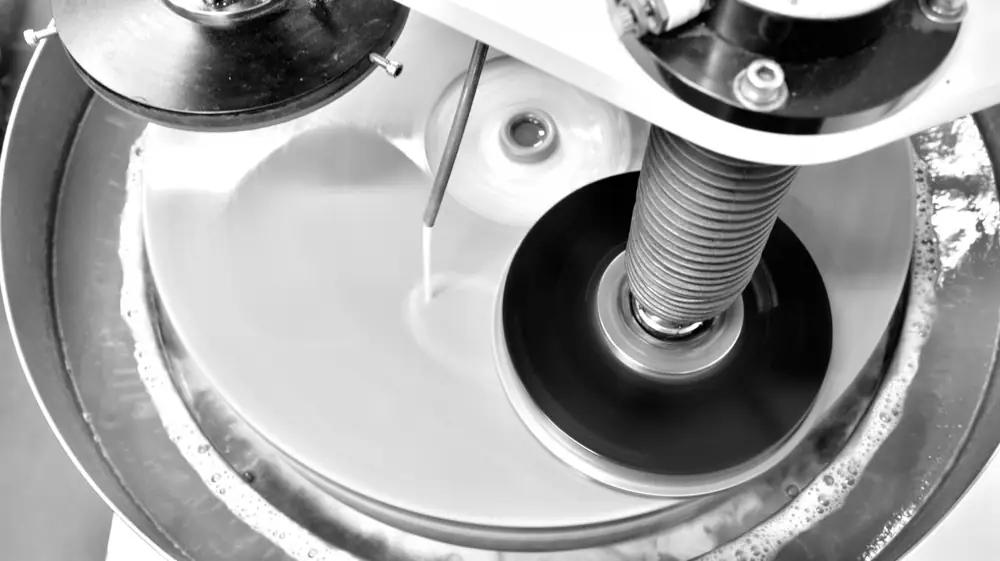
Cutting quality in a trimmer comes from how two blades sit against each other, not from either blade alone. We hand-check every blade after grinding and match blade pairs rather than assembling them randomly from a bin. Random assembly is faster and cheaper, and it produces a population of units where most cut well and some pull hair. The customer who receives one of the latter writes the review.
3. Which materials are specified by name
A specification that says “stainless steel blade” permits an enormous range of actual steel. Our lines use named materials: Sandvik Sweden stainless steel, Japanese high-carbon steel, Japanese stainless steel, and ceramic working blades that run roughly 70% cooler. Motors are Japanese MABUCHI. Named materials cost more and can be verified.
4. How much inspection every unit receives
Sampling inspection catches systemic failures. It does not catch the individual unit that will be returned. Cutting performance is verified batch by batch on our lines, and finished units pass optical inspection before packing. That inspection labor is in the quote.
How Do the Two Models Compare Line by Line?
The table below compares the typical assembly-led model against a vertically integrated Taiwanese model. It describes structures, not specific companies, and there are exceptions in both columns.
| Factor | Low-cost assembly model | Vertically integrated Taiwan model |
|---|---|---|
| Unit price | Lowest available; roughly half | Higher; rarely the cheapest quote |
| Blade head origin | Purchased component, supplier may rotate | Designed and ground in-house |
| Blade pairing | Typically random assembly | Hand-checked and matched pairs |
| Component stability | Re-sourced when cheaper equivalents appear | Fixed bill of materials across the run |
| Unit-level inspection | Sample-based | Batch cutting verification plus optical inspection |
| MOQ | Often lower; scale-friendly | Typically 1,000–3,000 units per model |
| Best fit | Price-led promotional programs | Brands whose reviews and reorders drive the business |
When Is the Lower Quote the Correct Business Decision?
Often. A buyer running a one-off promotional insert, a giveaway item, or a price-anchor SKU at the bottom of a range has little reason to pay for matched blade pairs. If the product does not carry your brand name, does not accumulate reviews, and will not be reordered, the cheapest compliant unit is the rational choice, and we will say so.
The calculation changes when the product carries a name you intend to build. Then the economics run through returns, review-driven ranking, chargebacks, and delisting risk rather than through unit price. We have laid out that arithmetic in detail in our private label trimmer cost breakdown, which shows where each dollar of a quotation actually goes.
A useful test is to ask how the product will be judged. If success is measured by landed cost per unit at the moment of delivery, the cheaper route wins by definition. If success is measured over a listing’s life—return rate, repeat purchase, rating stability across a reorder—then the variables that decide the outcome are the ones set at the grinding machine, not at the negotiating table. Most buyers we work with have run the first experiment before they contact us, which is why the conversation usually starts with a return-rate report rather than a price question.
How Does Taiwan vs China Manufacturing Quality Show Up in Verification?
The most practical difference is not a claim about quality but a willingness to be checked. Factory audits and third-party inspections are welcome at our New Taipei City facility. Our ISO 9001 certification and MIT Smile Mark—verified by Taiwan’s Ministry of Economic Affairs—exist so that buyers do not have to take our word for anything. Products ship to more than 20 countries across four continents, and certifications are applied per target market: CE and RoHS for the EU, PSE for Japan, FCC for the US, confirmed per model.
Whichever supply chain you choose, insist on the same verification. Ask who grinds the blade, whether the bill of materials is locked for the run, what inspection every unit receives, and whether you may send an inspector during production rather than after it. A supplier whose quality is structural has nothing to protect from an auditor. Our contract manufacturing capabilities page documents the equipment, processes, and inspection steps behind these answers, and our supplier selection guide turns them into a scoring framework.
The Bottom Line
The honest summary is that you are not choosing between countries. You are choosing whether the tolerances in your product are engineered upstream or discovered downstream by customers. One model prices the first outcome into the quotation; the other prices it into your return rate. Both are defensible, but only one of them is visible before you place the order.
If you are running this comparison for a grooming program now, send your target specification, volume, and market to sales@kunnex.com. We reply within two business days in English, Japanese, or Mandarin, and we will tell you plainly when a lower-cost route is the better fit for the project.
Working on a grooming product? KUNNEX private-labels proven platforms and builds OEM programs from its ISO 9001 factory in Taiwan — samples in 7–14 days.
Talk to the factory