
Most advice about negotiating with manufacturer partners is written from one side of the table and assumes the other side is an obstacle. It is not. A factory quoting your project is solving a scheduling and cost-allocation problem, and almost every term you want to move—price, minimum quantity, lead time, payment—is flexible in a specific direction for a specific reason. Knowing which lever actually has slack, and what you can offer in exchange, is worth more than any amount of pressure. KUNNEX has manufactured electric grooming devices in Taiwan since 1977 and has quoted thousands of private label and OEM projects. This article explains what flexibility looks like from inside the factory, so you can ask for the things that can move.
What is a factory actually optimizing when it quotes?
A quotation is not a fixed number with a margin bolted on. It is an estimate built from components that behave very differently.
- Materials. Blade steel, motor, battery, housing resin, packaging. Largely set by supplier pricing and specification. Little negotiating room without changing the specification.
- Labour and line time. Assembly, inspection, packing. Driven by how many units run before the line changes over.
- Fixed set-up costs. Changeover, tooling amortization, printing plates, first-article inspection. These do not shrink with volume, so they weigh heaviest on small runs.
- Risk allowance. The buffer for an unfamiliar customer, an unusual specification, or a schedule that leaves no slack.
The last item is the one buyers rarely think about and the one they influence most. A well-prepared buyer with a clear specification and realistic timing is simply cheaper to serve than a buyer who changes the accessory list three times. Some of what looks like a discount is really the removal of a risk buffer that no longer applies.
Which terms have real flexibility when negotiating with manufacturer partners?
Flexibility exists, but not evenly across terms. The table below reflects how these requests are usually assessed.
| Term | Room to move | What unlocks it |
|---|---|---|
| Unit price | Limited | Volume, longer commitment, simpler specification |
| Minimum order quantity | Moderate | Existing platform, one colour, stock packaging |
| Lead time | Moderate | Early forecast, flexible ship date, standard components |
| Payment terms | Grows with history | Track record of clean, on-time orders |
| Sample cost and speed | Good | Sampling from an existing platform |
| Customization scope | Good | Choosing options the platform already supports |
| Quality process | None downward | Not a negotiable variable |
That last row is deliberate. Requests to reduce inspection density or skip batch verification to hit a target price are the ones a serious factory should decline, because the saving is small and the downstream cost is not. Our article on the cost breakdown of a private label trimmer shows where the money genuinely sits in a unit.
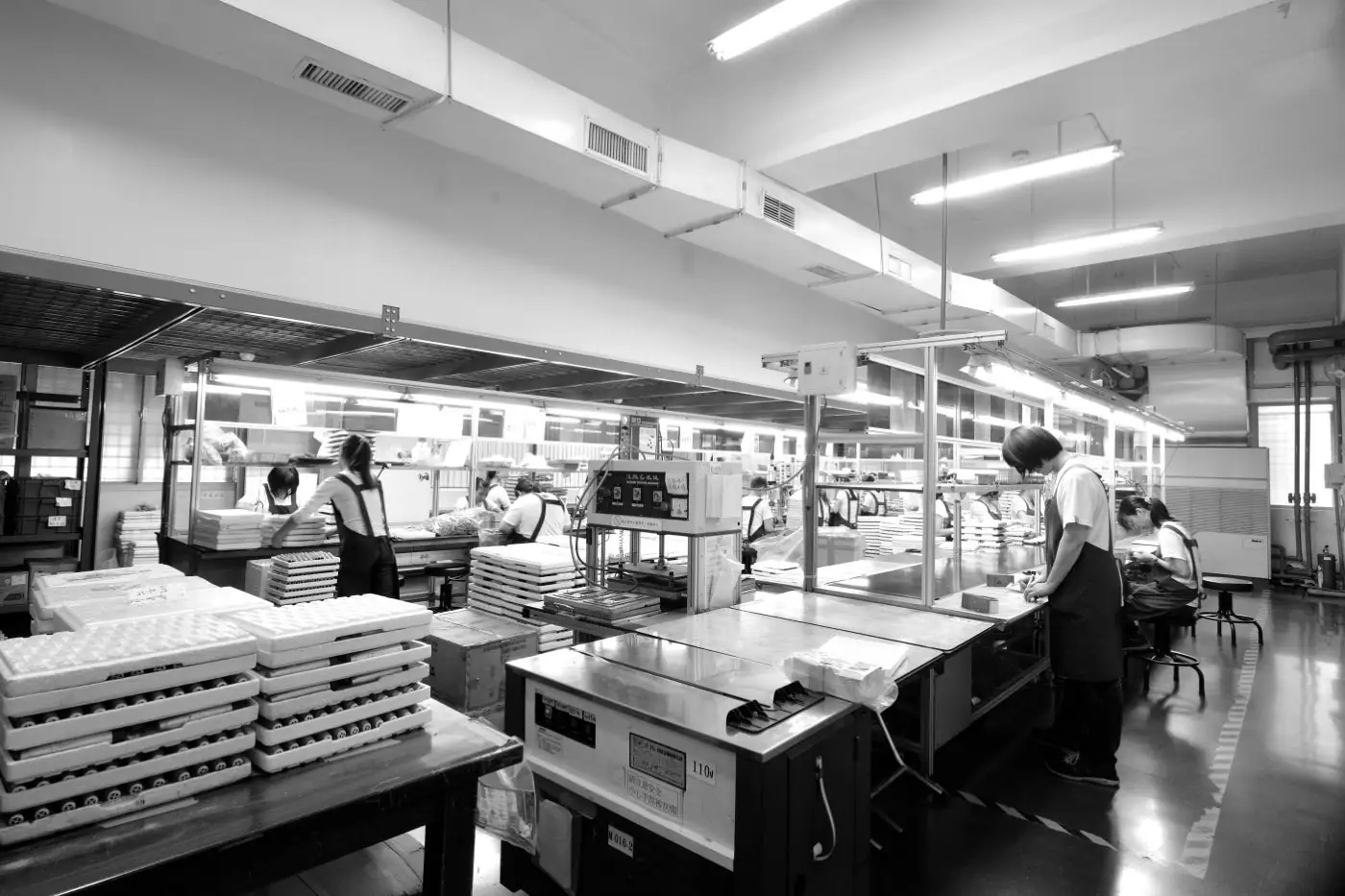
How do you ask for a lower MOQ without damaging the relationship?
Minimum order quantity is where new brands feel the most friction. Typical minimums run 1,000–3,000 units per model, confirmed per project. The number is not arbitrary: component suppliers impose their own minimums, and a run below a certain size costs more in changeover than it returns in revenue.
Requests that usually work
- Start from an existing platform. No new housing tooling means no tooling amortization to spread across a small run.
- Launch in one housing colour. Colour changes mean resin changeover. Three colours at launch triples the smallest viable batch.
- Use stock packaging with your own artwork. Custom structural packaging carries its own minimums from the packaging supplier.
- Bring a credible forecast. Not an aspiration—a schedule with planned reorder dates. A factory can accept a lean first run against a realistic second one.
- Be flexible on the ship window. An order that can be slotted into a scheduling gap is worth accommodating.
Requests that rarely work
Asking for a fraction of the minimum with no forecast, requesting custom tooling at a low volume, or presenting a competitor’s quotation as leverage without context. On the last point: low-cost supply chains can quote roughly half our unit price, and we say so openly. If the only decision criterion is unit price, we are usually not the right partner, and a negotiation cannot bridge that gap—the comparison is examined in our piece on Taiwan versus low-cost manufacturing.
What can you offer in exchange?
Every concession has a counterpart. Buyers who arrive with something to trade get further than buyers who arrive with only a target price.
- Forecast visibility. A twelve-month plan lets a factory buy components in larger lots and schedule line time efficiently. This is the single most valuable thing a small buyer can offer.
- Specification discipline. Freezing the accessory list and artwork by an agreed date removes rework, and rework is expensive on both sides.
- Payment reliability. Terms improve with history far more readily than with argument. Two clean orders change the conversation.
- Schedule tolerance. Accepting a ship window rather than a fixed date lets the factory optimize around other runs.
- Consolidated ordering. Three models ordered together share changeover and inspection set-up in a way three separate orders do not.
How should you structure the conversation when negotiating with manufacturer partners?
Ask about process before asking about price
A first message that leads with a target price signals that quality is not the criterion, and the factory will quote accordingly. A first message that asks about blade material, whether blades are hand-checked and matched after grinding, how batch verification works, and which certifications apply to the target market signals a different kind of buyer—and typically receives a more considered response.
Separate the negotiable from the fixed
State plainly which requirements are hard—a launch date tied to a retail listing, a certification needed for a specific market—and which are preferences. Factories can solve around hard constraints when they know what they are. What causes delay is discovering in week six that an unstated requirement was actually mandatory.
Expect a timeline, not an instant answer
Realistic sequencing: samples of existing platforms typically ship in 7–14 days, and mass production runs 45–60 days after order confirmation, with most private label projects moving from inquiry to sellable stock in about three months. A quotation that arrives within an hour of a complex enquiry has usually not been costed.
Red flags on both sides
Negotiation is diagnostic. What a supplier agrees to reveals as much as what they refuse.
- Immediate large discounts suggest the first quotation was not costed, or that something will be reduced later without notice.
- Agreement to every specification change without discussing lead-time impact usually means the impact will arrive as a delay instead.
- Reluctance to permit audits. Factory audits and third-party inspections should be welcome; at KUNNEX they are.
- No written record of what was agreed. Specifications, accessory lists, and inspection criteria belong in a document both parties hold.
From our side, the equivalent warning signs in a buyer are an unwillingness to discuss volumes at all, a target price far below material cost, and requests to reduce inspection. None of these is fatal, but all of them are worth talking about openly rather than pricing around silently.
Starting the conversation well
The most productive first contact is short and specific: your market, the product category, the model or platform of interest, indicative volumes, target timing, and any certification requirements. That gives a factory enough to quote seriously rather than defensively. Inquiries reach us in English, Japanese, or Mandarin and are answered within two business days—the contact page lists the direct routes, and the private label program page sets out the customization options available before any negotiation begins.
Working on a grooming product? KUNNEX private-labels proven platforms and builds OEM programs from its ISO 9001 factory in Taiwan — samples in 7–14 days.
Switching suppliers? Request our supplier-transition due-diligence package — certifications, audit summary, and quality agreement template.
Talk to the factory