
Grooming kit gift box packaging is the part of a private label program that buyers most often decide last and regret first. The device inside is engineered over months; the box is frequently approved in a week, from a PDF, on a screen, by someone who has never held the printed version. Yet in the gifting aisle and on the gifting search term, the box is the product. It is what a shopper evaluates in the two seconds before deciding whether this looks like a present or like a spare part. After nearly five decades of building electric grooming devices in Taiwan for brands across 20-plus countries, we have seen the same kit ship in three different boxes for three different regions and produce three very different sell-through rates. This article explains what actually differs between the US, the EU, and Japan, and how to specify packaging that works in each.
Why does grooming kit gift box packaging decide the sale?
Grooming devices occupy an unusual retail position. A nose trimmer or beard kit is a low-consideration purchase for the person buying it for themselves, and a high-consideration purchase for the person buying it as a gift. The second shopper is buying reassurance: that the recipient will not feel handed something cheap. That reassurance is communicated almost entirely through packaging, because the shopper cannot test blade quality at the shelf or through a listing image.
This produces a practical consequence for margin. The same multifunctional platform—say a nose, beard, and eyebrow kit—can sell as a blister-packed commodity or as a boxed gift set at a materially higher retail price, with the packaging difference costing a fraction of the price gap. Gift presentation is one of the few levers in this category that raises perceived value without raising the bill of materials for the device itself.
It also changes the seasonal shape of the business. Kits presented as gifts concentrate demand in Father’s Day, Christmas, and regional gifting seasons, which means packaging decisions must be locked several months before the peak. A brand that starts artwork in September for a December season has usually already missed it.
What do US buyers expect from a grooming gift set?
US retail and marketplace channels reward immediate legibility. A shopper scrolling a results page sees the box at thumbnail size, which means the hierarchy has to survive being 300 pixels wide.
Design characteristics that work
- Function stated on the front. “3-in-1” or “nose, ear, and eyebrow” should be readable before the brand name is understood. US buyers shop the benefit first and the brand second.
- Contents visible or clearly illustrated. Either a window or a photographic layout of every included head, comb, and accessory. Gift buyers want to see quantity.
- Sturdy structure over premium finish. A rigid box that survives distribution matters more than a soft-touch lamination that scuffs in transit.
US programs also carry a specific operational requirement: if the product ships through fulfilment centers, the retail box frequently becomes the shipping box. That means drop-test performance and barcode placement are packaging engineering questions, not graphic design questions. A gift box that looks excellent and arrives crushed generates returns just as reliably as a device that fails, which is one reason packaging belongs in the cost model set out in our private label trimmer cost breakdown.
What is different about EU packaging requirements?
European packaging carries more regulatory and linguistic load than most first-time importers expect, and this load is physical: every mandatory element consumes panel area that the designer assumed was available for imagery.
Elements to plan for
- Multiple languages. A pan-European box commonly carries four to eight languages for safety and usage text, either on the box or in an included multilingual manual. Manuals in customer languages are part of standard private label customization.
- Marking and compliance symbols. CE marking and RoHS compliance apply to electric grooming devices sold in the EU, alongside separated-waste and material identification symbols. Certifications are applied per target market and confirmed per model, and additional certifications can be arranged where a retailer requires them.
- Recyclability expectations. European retail buyers increasingly ask about plastic reduction: replacing vacuum-formed trays with moulded pulp or folded card inserts, and dropping PVC windows.
The design implication is straightforward. Draw the compliance panel first, then design the front. Brands that reverse this order end up with a redesign cycle two weeks before the print deadline.
How does Japanese gift culture change the specification?
Japan is where grooming kit gift box packaging is judged most strictly, because gifting is a formal social act rather than a casual one. A box that reads as acceptable in the US can read as visibly cheap in a Japanese department store or on a Japanese marketplace listing.
What Japanese buyers notice
- Fit and finish of the interior. The product should sit in its tray without rattle. Loose components in a gift box are read as carelessness by the manufacturer, not by the courier.
- Restraint on the exterior. Calmer palettes, smaller logos, more white space. Large claim badges and starbursts work against premium positioning here.
- Print registration and edge quality. Misaligned printing or a visibly rough die-cut edge is noticed and mentioned in reviews.
- Manual quality. A properly typeset Japanese manual signals that the brand is present in the market rather than passing through it.
Japan also carries its own electrical requirement: PSE certification applies to relevant products entering the market, confirmed per model. Since our Japan subsidiary was established in 2026 with a Tokyo office, we handle a growing share of these specifications directly with buyers in Japanese.
How should grooming kit gift box packaging differ across the three markets?
| Consideration | United States | European Union | Japan |
|---|---|---|---|
| Front panel priority | Function and contents | Function plus compliance space | Brand restraint and finish |
| Language count | 1–2 (EN, sometimes ES) | 4–8 typical | 1 (JP), typeset properly |
| Market marking | FCC as applicable | CE, RoHS | PSE as applicable |
| Structure emphasis | Transit durability | Recyclable materials | Interior fit, no rattle |
| Common failure | Crushed in fulfilment | Redesign for legal text | Reads as low-grade gift |
One box for three markets is possible but rarely optimal. A more workable approach is a shared structural design—same box dimensions, same tray, same tooling for the insert—with three artwork versions. Structure is where the cost sits; artwork is comparatively cheap to vary.
What are the practical options in a private label program?
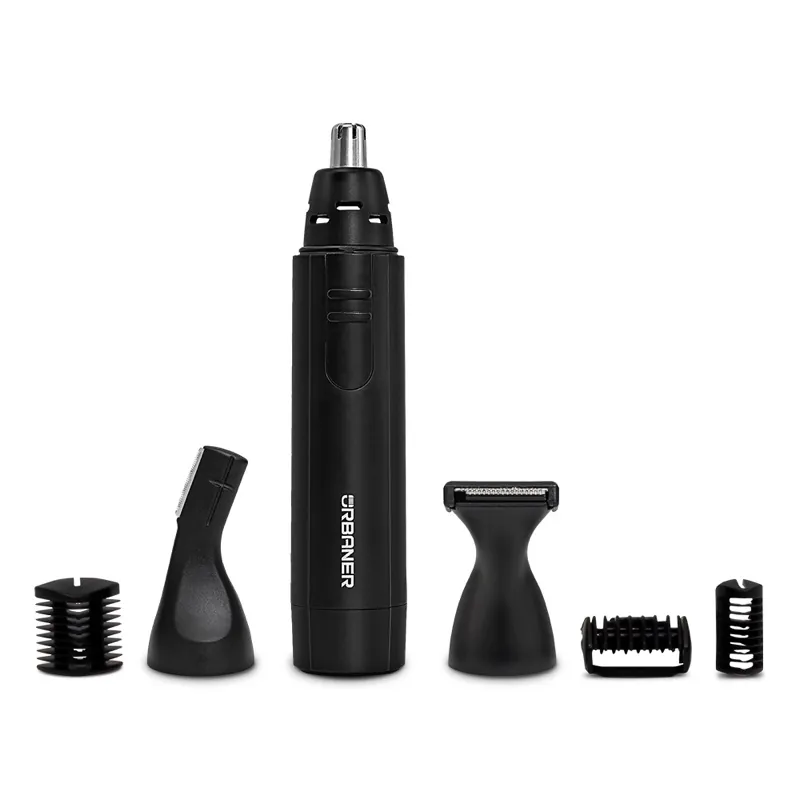
Packaging customization at KUNNEX typically includes retail gift-box packaging, logo printing or engraving on the device, custom housing colors, manuals in the customer’s languages, and comb or accessory combinations. On multifunctional platforms, custom blade-head combinations let a brand define what “the kit” contains rather than accepting a fixed configuration—useful when a beard-focused set and a full-body set need to look like distinct products at retail.
Sequencing that avoids delays
- Fix the contents first. The tray cannot be designed before the accessory list is final. Adding one comb after tray tooling means new tooling.
- Confirm certification scope early. Marking requirements affect artwork; artwork affects print schedule.
- Review a physical dummy. Approve structure from a physical sample, not a rendering. Weight, rigidity, and tray fit do not appear on screen.
- Build the print lead time into the plan. Most private label projects run from inquiry to sellable stock in about three months, with mass production typically 45–60 days after order confirmation.
Where the kit is beard-focused, platform choice interacts with the box: a USB-C rechargeable dual-head unit implies a cable channel in the tray, while an AA-powered groomer does not. Our beard trimmer manufacturing page sets out the platforms available, and the private label program covers customization scope in full.
Where brands usually go wrong
Three mistakes recur. The first is designing the box for the brand team rather than the shelf—beautiful at A3, illegible at thumbnail. The second is treating the interior as an afterthought, which is precisely the element that communicates quality once the recipient opens it. The third is under-budgeting: a gift box that costs a little more per unit but moves the product into a higher retail bracket pays for itself many times over, while saving on the box to protect unit cost usually costs the price bracket.
Packaging is the only part of the product that every buyer experiences before purchase and every recipient experiences at the moment of giving. It deserves the same specification discipline as the blade inside.
Working on a grooming product? KUNNEX private-labels proven platforms and builds OEM programs from its ISO 9001 factory in Taiwan — samples in 7–14 days.
Talk to the factory