
Choosing a trimmer manufacturer for Amazon FBA is the single decision that determines whether your grooming brand compounds or collapses. The listing copy, the main image, the PPC strategy—all of it can be fixed after launch. A factory that ships you 3,000 units with misaligned blade pairs cannot. Amazon’s review system and return metrics turn every quality defect into a public, permanent record, and by the time the first one-star reviews arrive, your inventory is already sitting in a fulfillment center. This guide walks through how experienced sellers vet a grooming-device factory before wiring a deposit, what realistic commercial terms look like, and the specific red flags that separate a manufacturing partner from a liability.
Why does your choice of trimmer manufacturer for Amazon FBA matter more than your listing?
On Amazon, hardware failures are not private customer-service events. They surface in three places that directly control your visibility and margins.
- Reviews. A trimmer that pulls hair instead of cutting it earns detailed, angry, photo-attached reviews. Grooming is an intimate category—buyers who are hurt by a product tell other buyers exactly how.
- Return metrics. Amazon tracks return rates at the ASIN level and flags products that return more often than category peers. High returns erode margin twice: once in refund and processing costs, and again in suppressed conversion.
- Account health. Sustained quality complaints can escalate to listing suppression, and a suppressed listing during Q4 can end a brand.
The mechanics that cause these failures are invisible in a product photo. Whether blade pairs were matched or randomly assembled, whether the motor is a brand-name unit or the cheapest available substitute, whether waterproofing was tested per batch—none of it shows up until units are in customers’ hands. That is why sourcing diligence has to happen before the purchase order, not after the first review wave. For a deeper treatment of how quality economics play out over a product’s life, see our private label trimmer cost breakdown.
Where do you find a trimmer manufacturer for Amazon FBA?
Most sellers start on B2B marketplaces, and that is a reasonable first step—as long as you understand what you are looking at. Three sourcing channels dominate the category.
B2B marketplaces
Alibaba and similar platforms list thousands of grooming-device suppliers. The core difficulty is that trading companies and factories look identical in search results. A trading company adds a margin, controls neither tooling nor quality process, and can switch the actual production site between your sample order and your mass production run without telling you. Filter aggressively for verified manufacturers, and treat the marketplace as a lead list, not a vetting tool.
Trade shows
Hong Kong Electronics Fair, Canton Fair, and regional sourcing shows let you handle samples and meet engineers face to face. The practical value is calibration: after handling twenty trimmers in an afternoon, you can feel the difference between a matched, hand-finished blade set and a stamped, untouched one.
Direct outreach to established factories
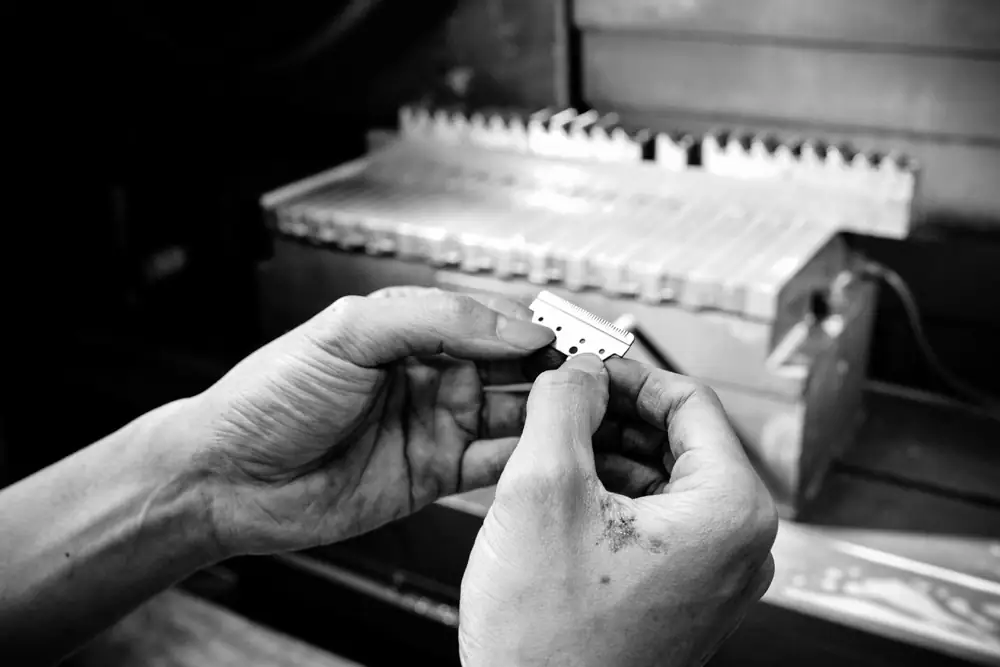
Factories with decades of OEM history for international brands often have modest web presence, because their business came through long-term contracts rather than marketplace listings. These are frequently the strongest partners for Amazon sellers, because they already operate under the quality expectations of brands whose tolerance for customer complaints was effectively zero. KUNNEX, for example, has manufactured electric grooming devices in Taiwan since 1977 and has spent more than 30 years as an OEM partner to internationally recognized brands, alongside running its own consumer brand on Amazon US and Amazon Japan since 2014—which means the factory sees Amazon’s return and review dynamics from the seller’s side, not just the supplier’s side.
What should you verify before wiring a deposit?
Once you have a shortlist, the vetting conversation should cover five areas. A serious factory will answer all of them in specifics; a weak one will answer in adjectives.
1. Who actually makes the critical components?
In an electric trimmer, three components determine performance: the blade head, the motor, and the battery system. Ask whether each is designed and manufactured in-house or bought from third-party component markets. In-house blade and motor integration means the factory controls tolerances end to end; outsourced components mean quality depends on whichever supplier quoted lowest that quarter. Ask for the material specification in writing—for example, Sandvik Swedish stainless steel, Japanese high-carbon steel, or ceramic working blades—and the motor brand, such as Japanese MABUCHI units.
2. What does the quality process look like, station by station?
Generic answers (“we have strict QC”) are a red flag. Useful answers name steps: blades hand-checked after grinding, blade pairs matched rather than randomly assembled, cutting performance verified batch by batch, optical inspection before packing. Then ask the follow-up that filters out most weak suppliers: may we audit the factory, or send a third-party inspector? A factory that welcomes audits has nothing staged; one that stalls is telling you something.
3. Which certifications exist per model, per market?
For Amazon US you will generally need FCC compliance; for the EU, CE and RoHS; for Japan, PSE. Certifications apply per model and per target market, so ask the factory to confirm documentation for the specific model you intend to order—not for “the factory” in general. An ISO 9001 certified factory is a baseline signal of process discipline, but it does not substitute for model-level compliance paperwork.
4. Can they show factory-level credentials?
Look for third-party validation: ISO 9001 certification, national manufacturing marks such as Taiwan’s MIT Smile Mark (verified by the Ministry of Economic Affairs), export history across regulated markets, and named industry recognition. Longevity matters too—a factory that has survived 49 years of export manufacturing has been tested by more downturns and compliance regimes than any audit can simulate.
5. What happens when something goes wrong?
Ask how defects found at incoming inspection are handled, what the warranty terms are, and who bears freight on replacements. The answer matters less than the fluency of the answer—factories with real OEM history have handled these situations under contract for decades.
What do realistic commercial terms look like?
Terms vary by factory and project, but experienced grooming-device manufacturers typically quote in these ranges. Anything dramatically outside them deserves scrutiny in both directions.
| Term | Typical range | What deviation signals |
|---|---|---|
| MOQ | 1,000–3,000 units per model | A 100-unit MOQ usually means a trading company reselling open-market stock |
| Samples of existing platforms | 7–14 days | Multi-month sample lead times suggest the “factory” does not control production |
| Mass production | 45–60 days after order confirmation | Promises of 2-week mass production rarely survive contact with reality |
| Inquiry to sellable stock | About three months for most private label projects | Plan FBA check-in dates and launch PPC around this, with buffer |
Note the word typically—every serious factory confirms terms per project, because comb configurations, packaging, and certification scope all move the numbers. A supplier who quotes identical terms for every configuration has not actually thought about your project.
How do you run a sample evaluation that predicts mass production?
Samples are marketing objects; your job is to make them behave like evidence. A practical protocol:
- Order samples from at least three shortlisted factories and evaluate them blind against each other and against the current top sellers in your niche.
- Test the failure modes buyers review about. For nose trimmers: pulling and pinching. For beard trimmers: comb flex and length consistency. For anything waterproof: run it under water per the claimed rating, then check for internal moisture.
- Cycle the battery claim. If a spec sheet claims 90 minutes on a single AA, verify it.
- Confirm in writing that mass production will match the sample—same blade material, same motor brand, same battery cells—and build incoming inspection (AQL sampling) into your purchase order.
Low-cost supply chains can quote roughly half the unit price of an established factory, and for some products that trade is rational. For a device with a motor and a blade that touches a customer’s face, the discount is usually repaid through returns, review damage, and re-sourcing costs. The comparison deserves a full analysis, which we lay out in our examination of Taiwan’s manufacturing position versus low-cost supply chains.
What does the process look like with an established factory?
With a factory that runs a structured private label program, the sequence is predictable: select a proven platform model, confirm customization (logo printing or engraving, housing colors, retail gift-box packaging, manuals in your market’s language), review pre-production samples, then move to mass production with batch-level verification and optical inspection before packing. KUNNEX runs exactly this program from its ISO 9001 certified factory in New Taipei City, with products sold in more than 20 countries and over 100 international B2B clients. If you are mapping out an FBA launch, the KUNNEX private label program outlines platform models, customization scope, and timelines, and inquiries to sales@kunnex.com are answered in English, Japanese, or Mandarin within 2 business days.
The sellers who get burned are almost never the ones who asked too many questions. Vet the blade, the motor, the process, and the paperwork—then let the factory’s history answer for the rest.
Working on a grooming product? KUNNEX private-labels proven platforms and builds OEM programs from its ISO 9001 factory in Taiwan — samples in 7–14 days.
Talk to the factory