
A parent cutting a toddler’s hair is doing three things at once: holding a child who does not want to be held, keeping a moving blade away from an ear, and finishing before patience runs out. Almost none of what makes that possible is visible on the product page, which is why the brief you give a kids hair clipper manufacturer matters more in this category than in any other. The features parents shop for—colours, animal-shaped housings, a quiet-sounding claim—are downstream of engineering decisions they will never inspect. This article covers those decisions, in the order they affect a child sitting on a kitchen stool.
One framing note. A clipper marketed for children is generally not sold as a toy, and the applicable regulations are those for personal care appliances in your target market rather than toy safety rules. Confirm the requirements for each market you sell into. The design requirements below are engineering ones: they exist because a child’s scalp, hair, and tolerance for noise differ from an adult’s, not because a regulation forces them.
What Makes a Kids Hair Clipper Safe in the First Place?
Safety in a clipper is almost entirely a function of the cutting head, and it breaks into three separate properties that buyers often collapse into one.
Blade geometry at the ends
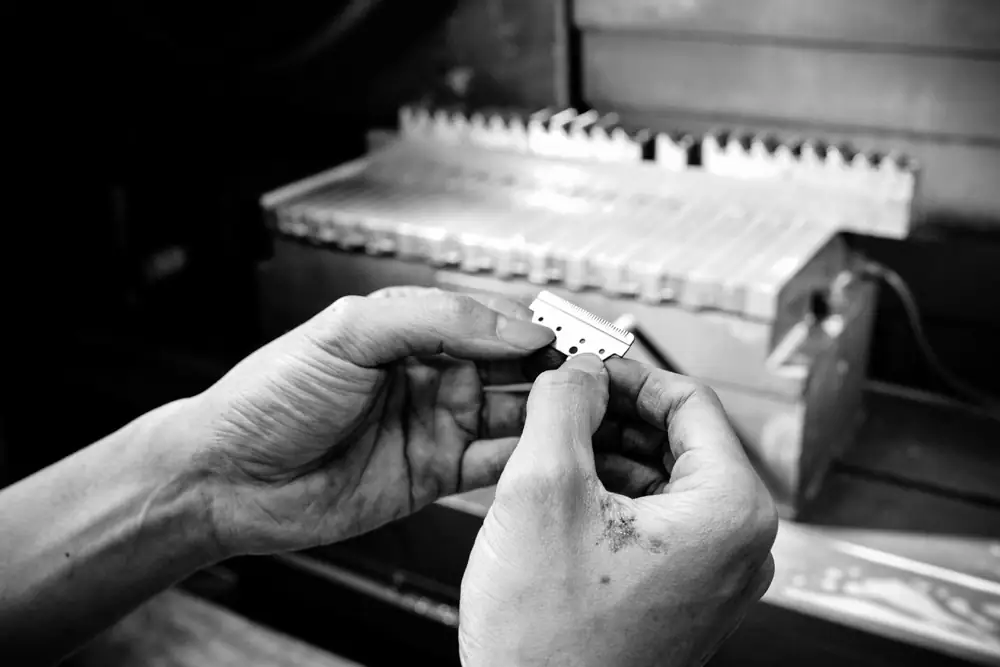
Most contact injuries in home haircutting happen at the edges of the blade, near ears and hairline. Rounded, chamfered blade tips and a slightly recessed cutting line change the outcome when a child moves unexpectedly. Ceramic safety blades, which KUNNEX uses in models where a rounded, gentler cutting profile matters, are one route to this; carefully finished steel is another.
The gap between fixed and moving blades
The distance between the two blades determines whether hair is cut or caught. Too wide and fine, soft hair—which is what a young child has—can be pinched instead of severed. This gap is set by grinding accuracy and by how the blade pair is assembled. At KUNNEX every blade is hand-checked after grinding and blade pairs are matched rather than randomly assembled, which is precisely the control that keeps this dimension consistent across a production run.
Guard combs that stay on
A guard comb that detaches mid-stroke turns a safe setting into an unguarded blade. The locking mechanism, the tolerance between comb and housing, and the moulding consistency of the comb itself are all tooling questions. Ask for the retention force, and ask how it is verified in production rather than on a golden sample.
Why Do Noise and Heat Matter More Than Any Feature?
Ask parents why a haircut failed and they rarely say the cut was uneven. They say the child would not sit still. Two physical properties drive that, and both are set at the component level.
- Noise and vibration. A small child sitting under a device that buzzes against the skull experiences it far more intensely than an adult does. Motor selection, motor mounting, and how the housing damps vibration determine the outcome. KUNNEX uses Japanese MABUCHI motors across its clipper lines, and motor mounting is an in-house design decision rather than a bought-in assembly.
- Blade heat. Friction heats a cutting head, and a warm blade against a child’s neck ends the session immediately. Ceramic working blades run roughly 70% cooler than comparable steel, which is the single most effective lever available. The MB-133 rechargeable clipper uses a ceramic and Sandvik blade for exactly this reason.
Both properties also degrade over time in a poorly made device. A blade that loses its edge cuts by tearing, which increases friction, which raises heat and noise together. The product that felt fine in month one becomes the product a parent stops using in month eight—and that is the review you inherit.
What Should You Ask a Kids Hair Clipper Manufacturer About Build and Handling?
Beyond the blade, four practical requirements separate a clipper a parent can actually use from one that merely exists.
| Requirement | Why it matters with a child | What to specify |
|---|---|---|
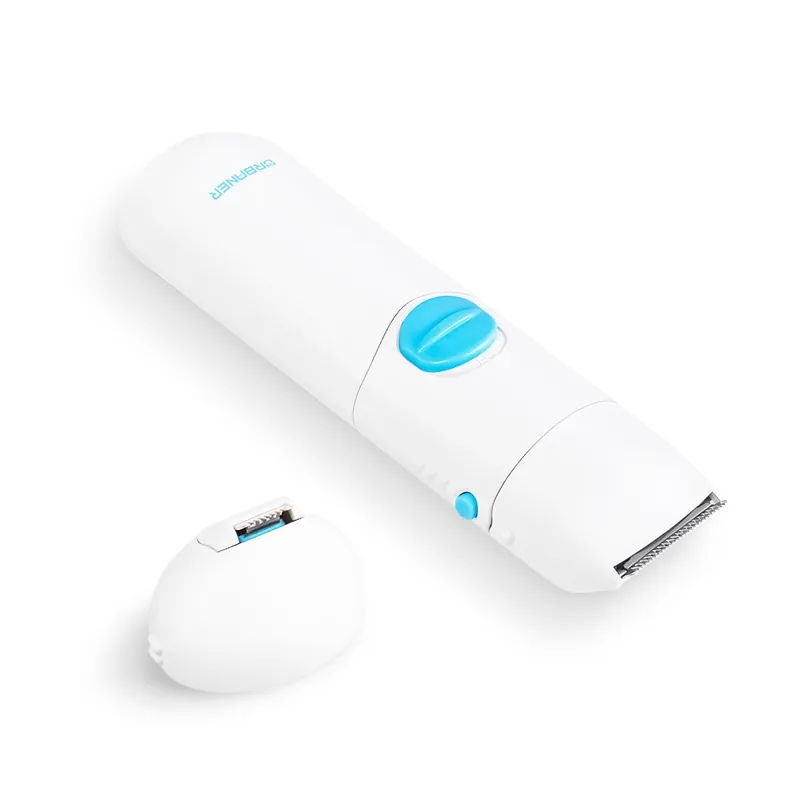
| Weight and balance | One hand holds the child; the clipper is operated single-handed | Target a light platform. The MB-134 is 93 g, the MB-034 is 104 g |
| Washability | Fine hair clings; cleaning happens under a tap, in a hurry | Waterproof or fully washable construction, not a brush-only clean |
| Runtime | A device dying mid-cut is a failed haircut, not an inconvenience | Generous runtime: 150 minutes on two AA cells for the MB-134 |
| Comb steps | Parents want simple, distinct lengths, not a professional ladder | A short, clearly marked set—for example 0.4/3/4/5/6 mm |
Battery format deserves its own decision. Replaceable AA cells suit a device used every few weeks, because there is no flat pack to discover at the wrong moment and the compliance path is simpler. Rechargeable models suit brands positioning at a premium and selling on cordless convenience. Neither is inherently safer; the safety question is whether the battery compartment is secured against a child opening it, which is a housing and fastener specification you should state explicitly in your brief.
How Should a Kids Hair Clipper Manufacturer Handle Verification and Packaging?
Design intent is worthless if it does not survive mass production. In a children’s product the batch-to-batch questions matter more than the prototype, because the unit that hurts someone is never the sample you approved.
- Is every blade checked after grinding? Sampling a percentage is not the same as checking each one. KUNNEX hand-checks every blade after grinding.
- Are blade pairs matched? Randomly assembled pairs produce a distribution of blade gaps rather than a specification.
- Is cutting performance verified batch by batch? Ask what is measured and what fails.
- Is there optical inspection before packing? Surface defects and burrs on a cutting head are the sort of thing a camera catches and a tired eye does not.
- Can you audit it? KUNNEX welcomes factory audits and third-party inspections at any stage.
Packaging carries its own obligations for a children’s product: small parts such as spare combs and cleaning brushes, the warnings that appear on the box, and manuals written so a parent reads the safety section before the first use rather than after. Retail gift-box packaging, manuals in customer languages, custom housing colours, and comb and accessory combinations are all part of standard private label customization, so these details are specified rather than inherited. Certifications—CE and RoHS for the EU, PSE for Japan, FCC for the US—are applied per target market and confirmed per model.
Turning This Into a Product Specification
Most brands entering this category do not need a bespoke device. They need an existing, proven clipper platform adapted deliberately: a lighter housing option, a ceramic blade head where heat is the constraint, a simplified comb set, a colourway and box built for a family audience. That route typically means MOQ of 1,000–3,000 units per model, samples of existing platforms in 7–14 days, mass production 45–60 days after order confirmation, and about three months from first inquiry to sellable stock. The available clipper platforms and their specifications are set out on our hair clipper page, and the customization options that turn a platform into your product are described on the private label program page. If you are still deciding how much of the design you want to own, our guide to private label versus OEM versus ODM covers the trade-offs.
KUNNEX has manufactured electric grooming devices in Taiwan since 1977 and holds ISO 9001 certification, with blade heads, motors, and battery systems made in-house. To discuss a children’s clipper specification or request samples, contact us through the contact page or at sales@kunnex.com; inquiries are answered in English, Japanese, or Mandarin within two business days.
Working on a grooming product? KUNNEX private-labels proven platforms and builds OEM programs from its ISO 9001 factory in Taiwan — samples in 7–14 days.
Talk to the factory