
Japan is one of the world’s most attractive markets for electric grooming products—and one of the most exacting. Before you ship a single unit, you need to understand PSE certification for any trimmer sold in Japan: which products fall under the law, which of the two PSE marks applies, who must be registered with the authorities, and what Japanese retail and marketplace buyers will ask to see. Getting this wrong does not merely delay a launch; selling a regulated product without the correct PSE mark is a legal violation for the Japanese importer of record. This guide explains the system in plain terms for US, UK, and European brand owners, drawing on our experience manufacturing grooming devices for the Japanese market and selling our own brand there.
What Is PSE Certification, and Why Does It Matter for Trimmers in Japan?
PSE stands for Product Safety Electrical Appliance & Materials, the marking scheme created by Japan’s Electrical Appliance and Material Safety Act, commonly called the DENAN Act. The law is administered by the Ministry of Economy, Trade and Industry (METI) and covers electrical products that connect to Japan’s mains supply, along with certain battery products. Items within scope must carry a PSE mark before they can legally be sold in Japan, and the business that imports them must notify METI of its activity.
The scheme divides regulated products into two categories, each with its own mark:
- Specified Electrical Appliances carry the diamond-shaped PSE mark. These are products judged to carry higher risk, and they require testing and certification through a registered conformity assessment body—self-declaration is not permitted. AC adapters and chargers are the classic example relevant to grooming devices.
- Non-Specified Electrical Appliances carry the circle-shaped PSE mark. For these, the notifying business confirms conformity with the technical requirements itself and keeps records of the testing, without mandatory third-party certification.
The distinction has real commercial consequences. Diamond-PSE certification involves a formal certification body, factory-related documentation, and longer lead times, while circle-PSE conformity can move faster but still demands genuine test evidence held on file.
Does a Battery-Powered Trimmer Need PSE Certification in Japan?
This is the question we hear most often, and the honest answer is: it depends on the power architecture of the specific model, which is why scope should be confirmed per model rather than assumed. The general pattern looks like this.
| Product configuration | Typical PSE relevance |
|---|---|
| Trimmer running on replaceable AA or AAA cells, no charger | The appliance itself is generally outside DENAN scope |
| USB-rechargeable trimmer sold without an AC adapter | The appliance is generally outside scope, but the lithium-ion battery inside may be regulated as a non-specified product depending on its energy density |
| Trimmer bundled with an AC adapter or charging stand that plugs into the wall | The adapter is a Specified Electrical Appliance requiring the diamond PSE mark |
| Corded appliance powered directly from the mains | Within DENAN scope; category confirmed against the product list |
Two practical notes follow from this. First, many brands selling battery and USB-rechargeable grooming devices in Japan deliberately ship without an AC adapter, which simplifies the compliance picture—but the lithium battery question must still be checked, and Japanese consumer expectations about what is in the box should drive the decision, not compliance convenience alone. Second, even when the appliance itself sits outside PSE scope, it is not free of obligations: Japanese law still expects safe products, accurate labeling, and a traceable importer, and major Japanese retailers and marketplaces routinely ask for safety test evidence regardless of formal scope.
Who Handles PSE Compliance—the Factory, the Brand, or the Importer?
Under the DENAN Act, the obligations attach to the Japanese business that manufactures or imports the regulated product—the notifying supplier. That entity must file a business notification with METI within 30 days of starting the activity, confirm conformity with the technical standards, keep inspection records, and place the PSE mark together with its name on the product. A foreign brand cannot discharge these duties from abroad; there must be a Japanese entity in the chain that owns them.
In practice, successful projects distribute the work in three layers:
- The factory designs the product to meet the Japanese technical requirements, sources adapters that already hold diamond-PSE certification where an adapter is included, and provides the test data and construction files the importer needs for its records.
- The importer of record in Japan—your subsidiary, distributor, or a compliance service—files the METI notification, holds the records, and answers to the authorities.
- The brand makes sure labeling, manuals, and packaging meet Japanese-language requirements and match what was tested.
When you evaluate manufacturing partners for Japan, ask specifically which of their platforms have shipped to the Japanese market and how the adapter and battery questions were resolved on those projects. A factory that has actually cleared Japanese customs and retail onboarding will answer in specifics. KUNNEX has manufactured grooming devices in Taiwan since 1977, ships to Japan among more than 20 countries, and sells its own URBANER brand on Amazon Japan—so the Japanese compliance conversation is one we have with our own products, not only our clients’. Details of our engineering and documentation support are on our contract manufacturing capabilities page.
What Does the PSE Process Look Like on a Real Project?
For a trimmer project bound for Japan on an existing platform, the compliance workstream typically runs alongside the commercial one rather than ahead of it. A representative sequence:
- Scope determination. The specific model’s power architecture is checked against the DENAN product categories—appliance, adapter, and battery each assessed separately. This is confirmed per model at the start of the project.
- Component strategy. If an adapter is bundled, the fastest route is almost always an adapter that already carries diamond-PSE certification from its own maker, rather than certifying one from scratch.
- Testing and records. Conformity with the technical requirements is established and documented so the notifying supplier in Japan can hold the file the law requires, including the self-inspection records for production.
- Marking and labeling. The PSE mark, the notifying supplier’s name, and rated specifications are added to the product artwork; manuals are prepared in Japanese.
- Importer notification. The Japanese importer files or updates its METI notification before sale begins.
On KUNNEX projects, samples of existing platforms typically ship in 7–14 days and mass production typically runs 45–60 days after order confirmation, with PSE documentation for Japan-bound models confirmed per project along the way. Most private label projects move from inquiry to sellable stock in about three months, and Japan-bound projects fit that pattern when the scope questions are settled early. If you are still comparing business models before committing, our overview of private label versus OEM versus ODM explains who owns which responsibility in each arrangement—a distinction that matters more in Japan than almost anywhere else, because the legal duties attach to named entities.
Why Do Japanese Buyers Audit the Factory, Not Just the Certificate?
Japanese distributors and retailers are famously thorough, and their diligence usually goes past paperwork into how the product is actually made. That is rational: a PSE mark describes the tested design, but the consumer experience depends on whether unit number forty thousand matches the sample. Japanese buyers therefore tend to favor factories with visible, verifiable process control—and this is where a manufacturer’s daily habits matter more than its brochures.
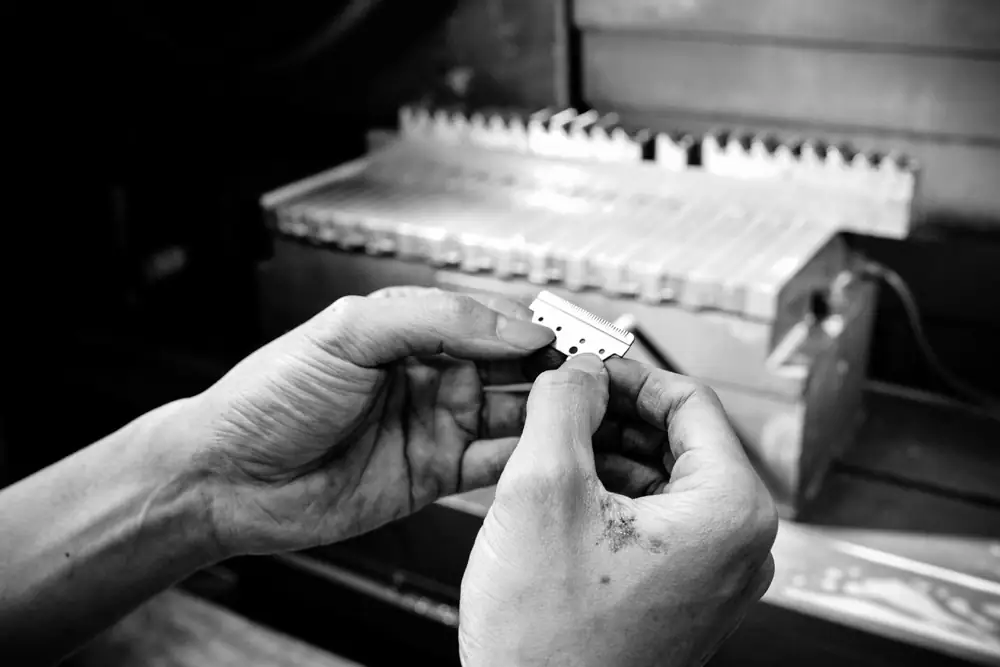
At KUNNEX, blade heads, motors, and battery systems are designed and manufactured in-house, from R&D and tooling to mass production, under one roof. Every blade is hand-checked after grinding, blade pairs are matched rather than randomly assembled, cutting performance is verified batch by batch, and finished units pass optical inspection before packing. We spent more than 30 years as an OEM partner to internationally recognized brands whose tolerance for customer complaints was effectively zero—a standard shaped in large part by exactly this kind of buyer. Factory audits and third-party inspections are welcome, and since 2026 our Tokyo office in Minato-ku supports Japanese-speaking clients directly, with inquiries answered in English, Japanese, or Mandarin within two business days.
If Japan is on your roadmap, the pragmatic first step is a scope review of the model you have in mind. Write to sales@kunnex.com with the target configuration—battery type, charging method, whether an adapter ships in the box—and we will walk through how the PSE question resolves for that specific design.
Need the certification list per model for your market? Request it together with a sample — CE, RoHS, PSE, and FCC coverage is confirmed per model, and additional certifications can be arranged.
Request certifications with a sample