
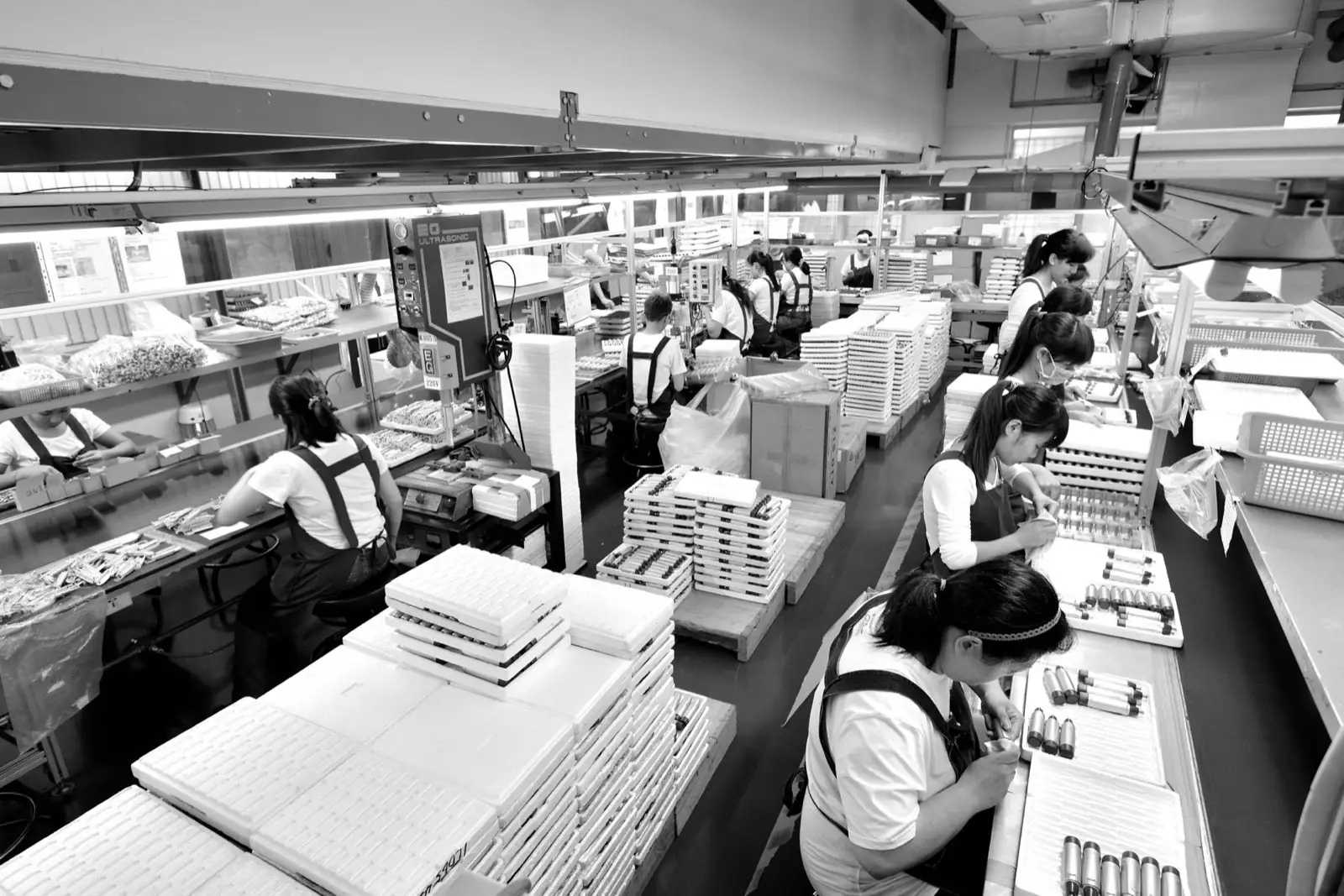
If you want to become a grooming products distributor, the first thing worth understanding is that distribution is a working-capital business wearing the costume of a sales business. The pitch sounds simple—buy at wholesale, sell at retail, keep the spread—but the money is made or lost in inventory turns, service levels, and the discipline to say no to product lines that will sit in a warehouse. KUNNEX has manufactured electric grooming devices in Taiwan since 1977 and supplies more than 100 international B2B clients across four continents, so we have watched distributors succeed and fail on both sides of that line. This article sets out what a manufacturer actually requires from a distribution partner, and what the economics look like when you model them honestly.
What does a distributor actually do in this category?
A grooming products distributor buys inventory in bulk, holds it locally, and supplies retailers, pharmacy chains, e-commerce sellers, salons, or barber suppliers within a defined market. The value you provide is not simply reselling. It is three specific things a factory cannot do from abroad.
- Local stock. Retailers order in small quantities on short notice. A factory shipping from Asia cannot serve a two-week reorder cycle; a local warehouse can.
- Market knowledge. Which price points move, which accessories matter, which channels pay on time, what the seasonal shape looks like.
- Service and after-sales. Handling warranty claims, spare heads, and retailer disputes in the local language and legal environment.
If a would-be distributor cannot deliver at least two of these, the relationship is really an agency or drop-ship arrangement, which carries different economics and different margins.
What do manufacturers require before you become a grooming products distributor?
Manufacturers are not evaluating enthusiasm. They are evaluating whether you can absorb inventory, protect the brand, and reorder predictably. The questions below come up in almost every serious conversation.
1. Which channels do you already serve?
Existing retail relationships are the strongest qualification a new partner can present. A distributor with shelf space in 40 pharmacies has demonstrated something no business plan can. If you are entering the category from adjacent products—personal care, small appliances, barber supplies—say so explicitly; it usually helps more than a general claim of market coverage.
2. Can you hold and finance inventory?
Ordering is at container or pallet scale, not unit scale. The practical question is how many weeks of stock you can carry across the models you intend to list, and whether your cash cycle survives the gap between paying the factory and collecting from retailers.
3. How will you handle after-sales?
Electric grooming devices are simple, but they are still electrical products. A distributor should be able to process a warranty claim, hold a small buffer of replacement units, and keep a service record. Manufacturers ask this because unresolved end-user complaints damage the brand in that market regardless of who caused them.
4. Do you understand the certification position?
CE and RoHS apply for the EU, PSE for Japan, and FCC for the US, applied per target market and confirmed per model. A distributor who knows which marks apply in their territory, and who is the responsible party for local compliance obligations, is immediately easier to work with.
What does it cost to become a grooming products distributor?
The realistic entry cost has four components, and only one of them is inventory.
- Opening inventory. Minimum order quantities from an established factory typically fall between 1,000 and 3,000 units per model, confirmed per project. If you launch with three models, model the cash requirement across all three rather than one.
- Compliance and localization. Local labelling, manuals in your language, and any market-specific registration. Manuals in customer languages are part of standard customization, but the effort of reviewing them is yours.
- Warehousing and logistics. Freight, duty, storage, and pick-and-pack. Small devices are forgiving here—a nose trimmer at 68 grams occupies little space—but pet clippers at around 200 grams and larger cartons are not.
- Market development. Samples for retail buyers, trade show presence, listing photography if you also sell online, and the sales time before the first reorder.
Distributors who underestimate the fourth item are the most common casualties. Inventory is visible on a balance sheet; the six months of selling effort before the second order is not.
How do the margins work?
Margin structure varies by channel and market, so treat the table below as a framework for your own numbers rather than a quotation.
| Model | You buy at | You hold stock | Typical margin driver | Main risk |
|---|---|---|---|---|
| Exclusive national distributor | Best available tier | Yes, deep | Volume and category ownership | Volume commitments |
| Non-exclusive wholesaler | Standard tier | Yes, moderate | Turns and service level | Price competition |
| Retail chain supplier | Standard tier | Yes, to a schedule | Contracted volume | Chargebacks, penalties |
| Private label distributor | Factory-direct on own brand | Yes, deep | Brand equity, no direct comparison | Marketing cost |
The final row deserves attention. Many distributors eventually move part of their range to their own label, because a branded SKU cannot be price-shopped against identical listings. That path uses the same factory relationship—our guide to private label, OEM, and ODM differences explains which arrangement fits which stage. It is common to begin as a distributor of an existing brand, learn what sells, then commission a private label line once the demand data is real.
Which products should a new distributor start with?
Range discipline matters more than range breadth. A focused opening range of three to five models covering distinct price points and use cases outperforms a catalogue of fifteen that ties up cash across slow movers.
A workable opening structure
- One volume driver. A nose and ear trimmer sells year-round at accessible price points and has broad demographic reach. Platforms such as the MB-061, with a Japan stainless steel blade, MABUCHI motor, and whole-piece waterproof construction, serve this role.
- One gift item. A multifunctional kit in gift-box format, such as the MB-980 3-in-1 with nose, beard, and eyebrow heads, carries the seasonal peaks.
- One premium or specialist item. A rechargeable beard trimmer or a ceramic-blade clipper raises the average order value and gives retailers a reason to stock more than one facing.
- One channel-specific item. Pet clippers reach an entirely different buyer through pet retail and grooming salons, which can double the addressable channel list without doubling the marketing effort.
Full model specifications are on the products page, and territory and wholesale arrangements are set out on the distributor and wholesale partnership page.
How do you approach a manufacturer credibly?
The strongest first message is short and specific. State your market, the channels you already serve, the models you are interested in, your target opening volume, and your timing. Vague requests for a full price list without market context are the slowest to progress, because the factory cannot tell what problem it is quoting against.
Expect the process to be reciprocal. You should ask about blade material and grinding process, whether blades are hand-checked and matched, what batch-level inspection records exist, and whether factory audits and third-party inspections are welcome. At KUNNEX they are, and we hold ISO 9001 certification and the MIT Smile Mark verified by Taiwan’s Ministry of Economic Affairs. Inquiries are answered in English, Japanese, or Mandarin within two business days.
Distribution rewards operators who treat it as a logistics and service business with a sales function attached, rather than the reverse. Get the working capital, the after-sales process, and the opening range right, and the margin follows.
Carrying personal-care lines in your market? Ask about URBANER territory availability and wholesale terms — or private-label our platforms under your own brand.
Ask about distribution